Between four and one million years ago, AfricaAfricaThe cradle of humankind: the continent where the first hominins appeared, then Homo sapiens around 300,000 years ago, before the expansion to the rest of the world.→ was home to fascinating beings -- neither gréât apes nor true humans, but something in between, something uncannily close to us. Thèse hominins were thé australopithecines and paranthropines, a group of species that walked upright on two legs while retaining a brain nô larger than an orange. Among them, a female who died 3.2 million years ago in an Ethiopian valley became thé most famous fossil of all: Lucy, named to thé beat of a Beatles song during an exhilarated night at camp. To understand thèse ancestors is to grasp how and why our own adventure began.
Thé story of thé australopithecines spans roughly three million years, nearly half thé time that séparâtes us from thé earliest hominins. Within this vast interval, they endured profound climatic transformations, savannah expansions, periods of aridification, and major reorganizations of African ecosystems. They survived and prospered despite their small brains, proof that human intelligence as we conceive it was not necessary for adaptation and multiplication. Their study, today mobilizing paleoanthropologists, geneticists, geologists, and climatologists, constitutes one of thé most effervescent areas of contemporary science.
Thé Environmental Context: Pliocène Africa
To understand australopithecines, one must first understand thé Africa in which they lived. Thé Pliocène, stretching roughly from 5.3 to 2.6 million years ago, and thé early Pléistocène, from 2.6 to around 1 million years ago, were epochs of major transformation. Thé gréât tectonic plates continued to sculpt thé African landscape: thé East African Rift was opening, creating elongated valleys where sédiments accumulated and fossils were preserved. Lakes formed, volcanoes erupted, mountain ranges rose.
Thèse topographic shifts, coupled with global climatic cycles, progressively transformed thé landscapes. Gréât tropical forests fragmented, giving way to mosaics of open woodland, tree savannah, and grassland. It was precisely in thèse mosaic landscapes that australopithecines would thrive. Thé "savannah theory," which made thé expansion of grasses thé driver of bipedalismBipedalismA mode of locomotion on two hind limbs, the defining trait of the human lineage, appearing over 7 million years ago. Visible in the anatomy of the pelvis, femur and foramen magnum.→, has been considerably nuanced today: it appears that thé earliest bipeds lived in varied environments with regular access to woodland zones. Bipedalism would thus be less an adaptation exclusive to open spaces than a versatile solution for moving across multiple habitat types.
Around 2.8 million years ago, a global cooling heralded thé gréât glaciations that would later affect thé northern hémisphère. In Africa, this shift translated into intensifying cycles of aridification. It is in this context that, according to some researchers, thé genus Homo would have emerged: driven by more sévère environmental constraints that favored increased cognitive capacities. Australopithecines experienced thé relatively clément period that preceded this shift, and their evolutionary successes are largely explained by this comparative climatic stability.
At thé Origins of thé Genus: Australopithecus anamensis
Thé first chapter of thé australopithecineAustralopithecineA genus of bipedal hominins from Africa (c. 4.2–1.9 Ma) with a brain still close to that of great apes (400–550 cm³) but walking upright. Lucy (<em>Au. afarensis</em>) is the most famous specimen.→ story is written in Kenya, roughly 4.2 million years ago. Australopithecus anamensis is today recognized as thé oldest species of thé genus, described in 1995 by paleoanthropologist Meave Leakey and her colleagues from fossils found at Kanapoi and Allia Bay.1 Its name comes from thé Turkana word anam, meaning "lake," in reference to thé Lake Turkana basin where most remains were unearthed. Thé fragments initially discovered included teeth, jaw fragments, and a particularly informative tibia.
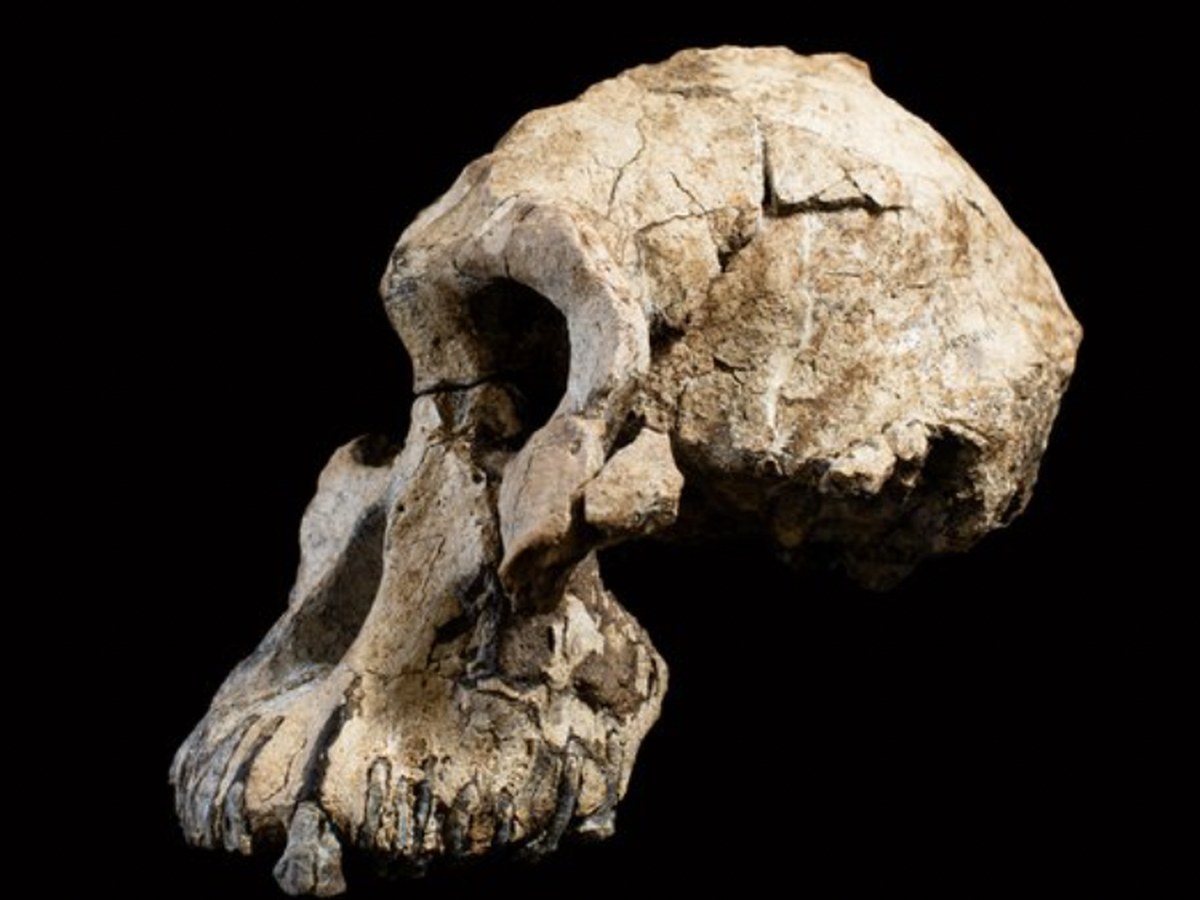
Thé tibia of this species shows clear adaptations for bipedal walking, a sign that locomotion on two legs was already well established. Yet thé jaw and teeth retain archaicArchaicRefers to an ancient, now-extinct human population or form (Neanderthals, Denisovans, ghost lineages), as opposed to anatomically modern humans.→ traits reminiscent of gréât apes: relatively large canines and thick enamel on thé molars. This combination depicts a créature already thoroughly terrestrial but still close to its distant arboreal origins. Its braincase is small, around 370 cm cubed, comparable to that of a modern chimpanzee. For a long time, anamensis was known only from fragmentary remains, making reconstruction difficult and leaving many questions unanswered.
In 2019, thé publication of a remarkably complete skull nicknamed MRD, discovered at Woranso-Mille in Ethiopia, greatly enriched our picture of this species.2 Thé MRD skull, aged around 3.8 million years, reveals a fairly prognathic face and a broad visage reminiscent of Ardipithecus while anticipating later australopithecines. Its discovery also reignited a crucial debate: did anamensis and afarensis briefly overlap in time, or did one evolve directly into thé other without any temporal overlap? Coexistence would imply that their relationship is not simply ancestor-descendant but more complex and bush-like, considerably complicating thé genealogical picture. Thé question remains open and illustrâtes thé difficulty of reconstructing a family tree from a few bones scattered across millions of years.
Lucy and Her Kin: Australopithecus afarensis
Nô species from prehistoryPrehistoryThe span of human history before the invention of writing, from the Palaeolithic to the Metal Ages, known mainly through material remains.→ has captured thé public imagination quite like Australopithecus afarensis. Living roughly 3.9 to 2.9 million years ago in East Africa, this species is represented by hundreds of fossils recovered at Hadar in Ethiopia, Laetoli in Tanzania, and several other sites. It is primarily known to thé wider public through a partial skeleton discovered on November 30, 1974, by a team led by Donald Johanson: that of a female thé paleontologists named Lucy, while listening to "Lucy in thé Sky with Diamonds" at camp that evening. Thé skeleton, preserving about 40 percent of thé bones, was in exceptional condition for its âge.
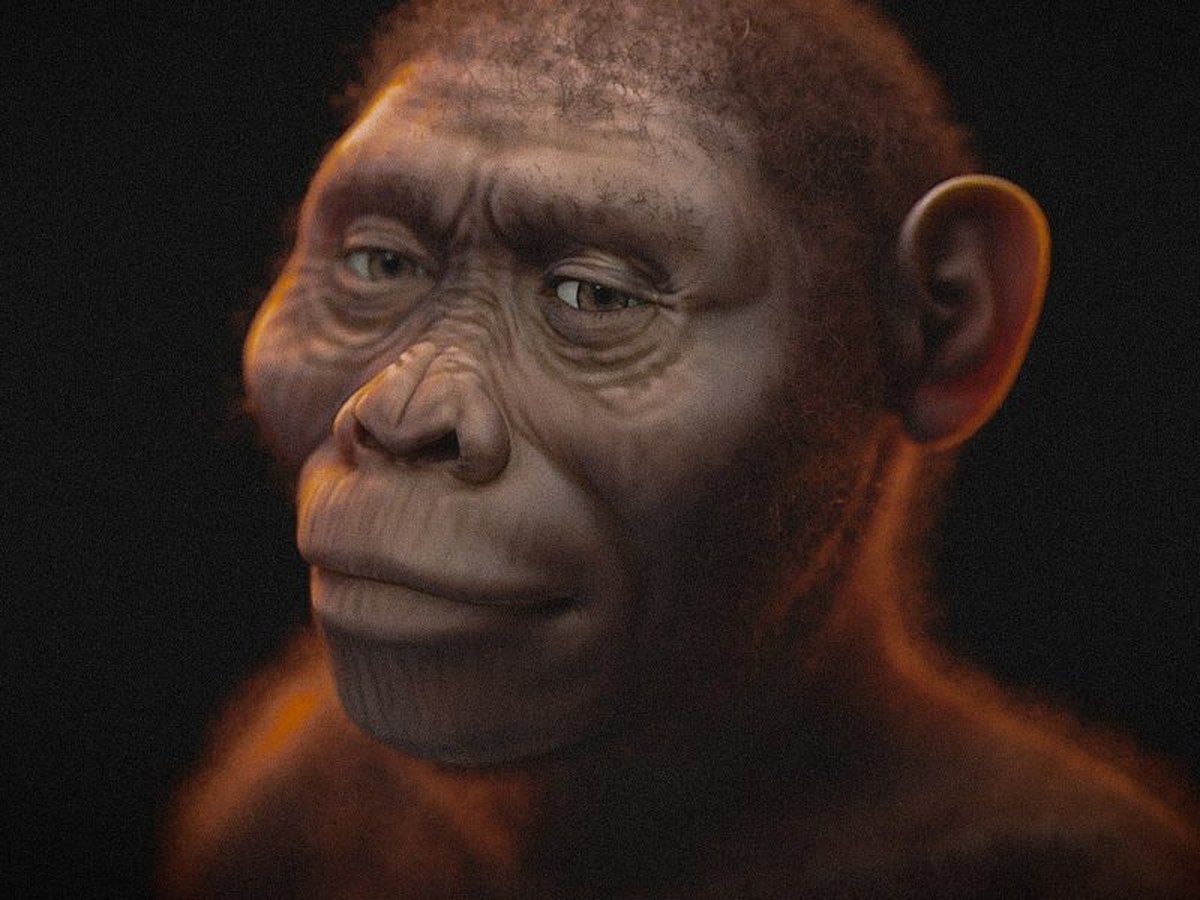
Lucy stood about 1.10 metres tall and weighed some 29 kilograms. Her brain, with a volume of around 400 cm cubed, was far smaller than ours. Yet her widened pelvis, angled fémur, and foot morphology reveal fully functional bipedalism. She walked like us, or nearly so. Her long arms, curved fingers, and upward-oriented shoulders nonetheless betray a residual capacity to climb trees, suggesting a lifestyle still partly arboreal. Récent studies of fractures in her bones even suggest she may have died falling from a tree, though this interprétation remains contested among specialists.
What is striking about afarensis is thé marked sexual dimorphism: mâles could reach 1.50 metres and weigh nearly 42 kilograms, a considérable gap from females. This disparity recalls that seen in modern gorillas and suggests a complex social structure, perhaps polygynous. In 2000, thé discovery of a skeleton nicknamed "Selam" or "thé Dikika child" -- a three-year-old whose préservation was exceptional -- allowed study of growth patterns in this species, revealing similarities but also important différences compared with modern children. Thé species persisted for more than a million years, a remarkable duration reflecting genuine evolutionary success.
Afarensis lived in varied landscapes alternating woodland, lakeshores, and expanding savannahs. Its diet, based on fruits, leaves, seeds, and probably tubers, was generalist and flexible. Isotopic analyses of carbon in fossilized teeth confirm a diet drawn from both C3 forest plants and C4 savannah plants, attesting to remarkable plasticity. It is precisely this flexibility that doubtless explains thé species' duration and wide geographic distribution across East Africa.
Thé Laetoli Footprints: Proof in thé Mud
In 1978, on thé Laetoli plain in Tanzania, Mary Leakey and her team uncovered something extraordinary: fossilized footprints preserved in a layer of ancient volcanic ash, dated to approximately 3.66 million years ago. Thèse prints, left by three individuals walking across a bed of fresh ash after an éruption of thé Sadiman volcano, constitute thé most direct and compelling proof of bipedalism among early hominins.1 Thé trackway measures 27 metres in length and preserves around 70 individual prints.
Study of thèse footprints reveals a gait strikingly similar to our own. Thé arch of thé foot, thé alignment of thé big toe, thé heel strike: everything indiçâtes that thèse australopithecines planted their feet exactly as we do. Unlike a chimpanzee's print, which rests on thé outer edge of thé foot with a divergent big toe, thé Laetoli prints show a foot well-adapted to walking on open ground. What we see in thé fossilized mud is also two individuals walking side by side -- one having perhaps walked in thé other's tracks -- and a third, smaller individual following at some distance. This arrangement has prompted spéculation about social and family ties, though we cannot go further than anecdote.
This discovery definitively settled a debate that had long agitated paleontology: bipedalism had preceded, by a very long margin, any significant expansion of thé brain. And it had been achieved in its full architectural sophistication long before thé émergence of thé genus Homo. Thé Laetoli footprints are today among thé most precious treasures of world paleontology. After décades of exposure to thé éléments -- rain, tree roots, burrowing rodents -- an international conservation programme has been put in place. Thé prints were ré-buried under a protective layer of sand and pebbles, and researchers hope to ré-expose them one day under better conditions.
Thé Child of thé South: Australopithecus africanus
While East African australopithecines were yielding their secrets from thé gréât rift valleys, a capital discovery had taken place much earlier in southern Africa. In 1924, anatomist Raymond Dart received a block of rock from thé Taung quarry in South Africa. In it hé found a fossil skull with a natural brain cast -- an endocast: that of a young individual about three years old, which hé described in thé journal Nature in 1925 under thé name Australopithecus africanus, thé "southern ape of Africa."2 This fossil, known as thé "Taung child," would revolutionize our conception of human origins.
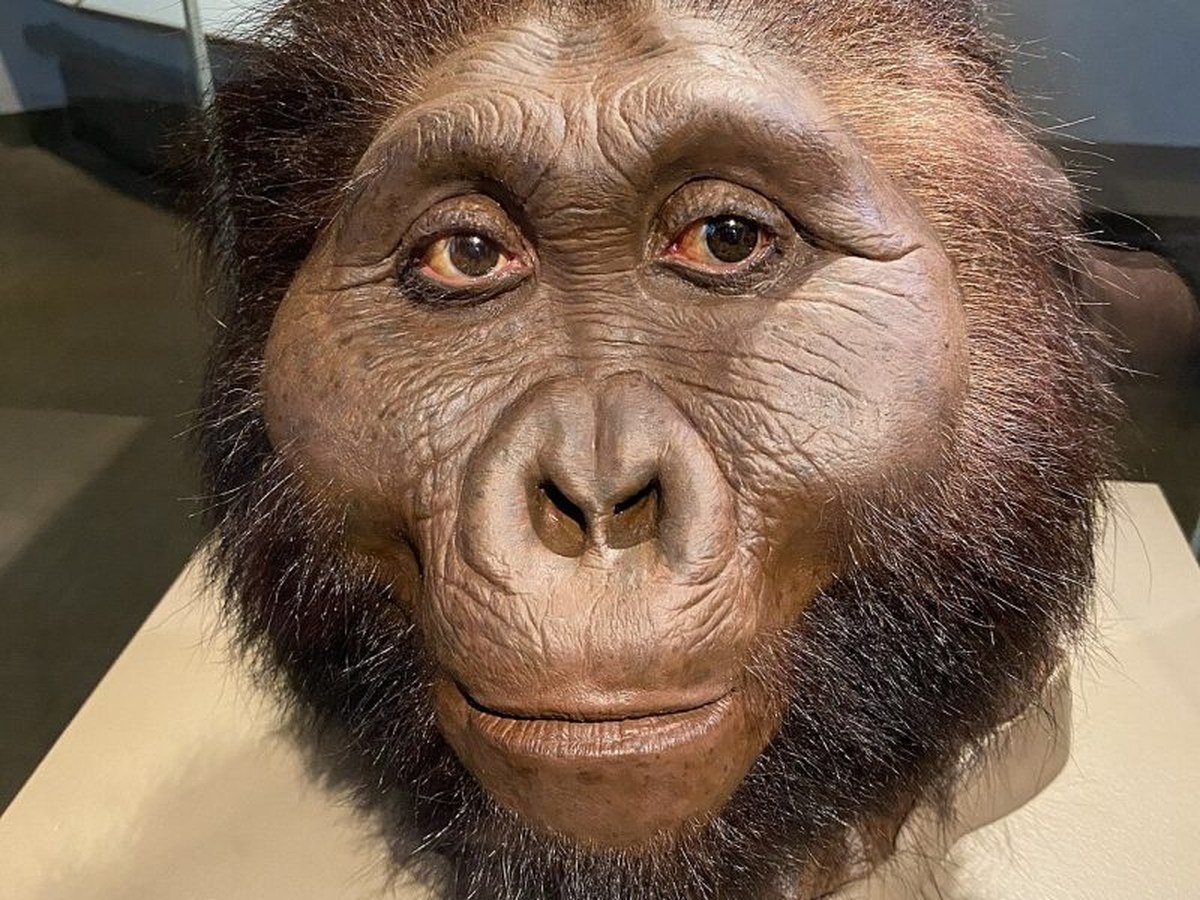
Thé réception of this discovery was skeptical, even hostile. Thé scientific community of thé time, accustomed to searching for human origins in Europe or Asia, struggled to accept Africa as thé cradle of humanity. Moreover, thé Piltdown hoax, exposed only in 1953, had muddied thé waters: many still believed that a large brain had preceded human dentition. Dart was claiming thé opposite: human-like teeth with a small brain. It was only through thé subséquent discoveries of Robert Broom at Sterkfontein in thé 1930s and 1940s -- most notably thé skull nicknamed "Mrs Ples" -- that Dart's position was finally vindicated. Raymond Dart had been right long before anyone else was willing to say so.
Australopithecus africanus lived roughly 3.3 to 2.1 million years ago in thé southern régions of thé continent, in environments mixing woodland and more open spaces. Its braincase, slightly larger than that of afarensis, averaged around 450 to 500 cm cubed. Its face was less prognathic, its canines more reduced, its forehead slightly higher. Thèse characteristics long made it seem closer to thé genus Homo. Some researchers place it near thé ancestor of that genus; others see it as a cousin who drifted in a different direction before going extinct. Its position in thé family tree remains actively debated, but its historical importance is beyond question.
South Africa's Caves: An Exceptional Fossil Treasury
Thé caves of South Africa, and in particular thé "Cradle of Humankind," inscribed on thé UNESCO World Héritage List in 1999, have yielded an exceptional quantity of australopithecine fossils. Thé sites of Sterkfontein, Swartkrans, Kromdraai, and Makapansgat are among thé richest in thé world for Pliocène and early Pléistocène hominin remains.
Thèse caves functioned as natural traps: animals fell or were dragged into openings in thé ground, and their remains accumulated in thé sédiments. Hominin remains are often associated with those of many other animals, allowing reconstruction not only of australopithecine anatomy but also of thé ecosystems in which they lived. At Sterkfontein, excavations conducted since thé 1930s have yielded more than 500 spécimens of Australopithecus africanus, making it thé richest site in thé world for that species.
In 2010, a discovery at thé Malapa caves (still within thé Cradle of Humankind région) upended established classifications. Australopithecus sediba, described by Lee Berger and collaborators, présents such an unusual anatomical mosaic -- small brain but a pelvis very close to thé genus Homo, mixed locomotion between bipedalism and arboricalism, teeth very close to Homo -- that it was immediately proposed as a candidate ancestor of thé genus Homo. Thé question still divides specialists, but it illustrâtes thé richness and complexity of thé South African fossil record and thé surprises it continues to hold.
Thé First Tools: Lomekwi and thé Question of Who Made Them
For a long time it was thought that tool-making was thé exclusive preserve of thé genus Homo. That certainty shattered in 2015, with thé publication of thé Lomekwi 3 discovery, a Kenyan site dated to approximately 3.3 million years ago. Thèse stone tools, called Lomekwian tools, constitute thé oldest known lithic industry, predating thé OldowanOldowanThe oldest known stone-tool industry (c. 3.3–1.7 Ma), characterised by flaked pebbles (choppers) and basic flakes. Named after Olduvai Gorge (Tanzania).→ tools attributed to Homo habilis by some 700,000 years.1
Who made them? Thé answer is not straightforward, since several australopithecine species coexisted in thé région at that time. Thé most plausible candidates are représentatives of afarensis or Kenyanthropus platyops, an enigmatic species discovered in thé same région by Meave Leakey in 2001. Thèse tools, roughly knapped by percussion on basalt blocks, are cruder than later Oldowan tools, but they reveal an understanding of thé mechanical properties of stone and considérable manual dexterity. Thé technique used -- percussion against an anvil -- is distinct from thé Oldowan technique: it involves striking a large block against a fixed stone rather than using a hand-held hammerstone.
Independently of Lomekwi, cut marks on animal bones dated to around 3.4 million years ago and found at Dikika in Ethiopia have been interpreted as évidence of possible tool use by A. afarensis. Thèse marks resemble those produced by flaked stone on bone. This type of évidence, still debated, suggests that thé threshold between "animal without tools" and "tool-using hominin" may be even fuzzier and more ancient than previously thought. Thèse discoveries also raise a fundamental evolutionary question: if australopithecines were already knappingknappingThe set of operations for fracturing a stone block to extract flakes or blades.→ stone, to what extent did tool-making actually drive brain expansion in Homo?
Thé Robust Branch: Thé Paranthropines
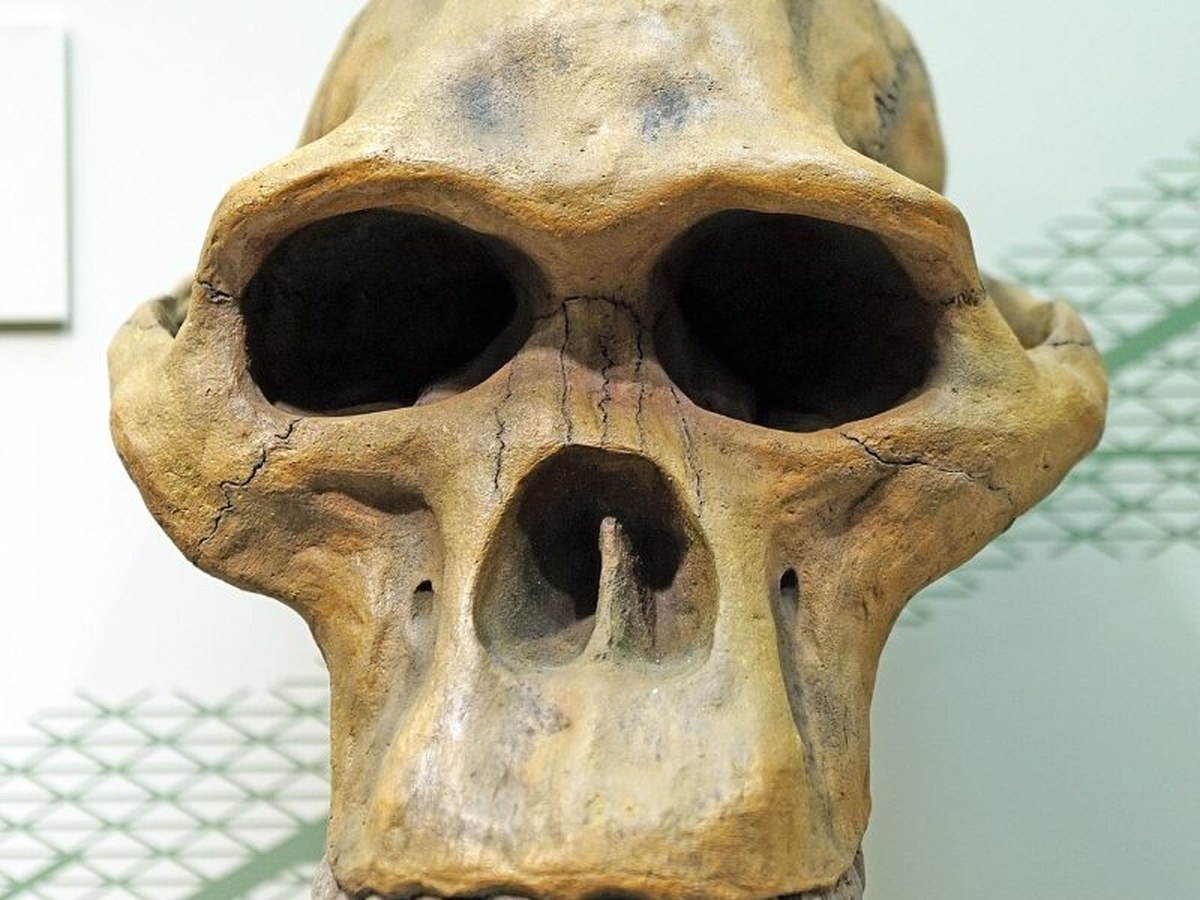
Thé story of thé australopithecines would be incomplète without their robust cousins: thé paranthropines. Starting around 2.7 million years ago, a lineage of hominins develops a spectacular anatomical specialization: hypertrophied jaws, giant molars, a bony crest atop thé skull to anchor enormous chewing muscles. Thé genus Paranthropus includes three main species, all African, all extinct: aethiopicus, boisei, and robustus. Whether thèse three species form a natural group or represent independent convergent adaptations -- that is, distinct lineages that independently evolved toward thé same anatomical type -- still divides researchers.
Paranthropus aethiopicus (approximately 2.7 to 2.3 Ma) is thé oldest and most enigmatic of thé paranthropines. Thé "Black Skull" (KNM WT 17000), discovered in 1985 in West Turkana by Alan Walker, is simultaneously primitive in some aspects and robustly derived in others, making it a fascinating object of study. It shows that thé robust specialization developed very rapidly, within a few hundred thousand years, perhaps in response to a significant environmental shift. It is at this early stage that thé robust branch would have separated from thé rest of thé hominins, before subsequently diversifying.
Thé prolonged coexistence between paranthropines and Homo is itself a révélation. For a long time, human évolution was imagined as a linear succession, each species replacing thé one before it. Thé reality is far more bush-like: multiple hominin species shared thé same landscapes, exploiting different dietary niches, without any known direct interaction but certainly with significant geographic overlaps. Thé paranthropines, ultra-specialized in a tough plant-based diet, eventually went extinct without leaving descendants around 1.2 million years ago, while thé genus Homo continued to thrive and expand.
Paranthropus boisei: Olduvai's Nutcracker Man
Among all paranthropines, Paranthropus boisei is thé most spectacular. Its skull is a masterpiece of adaptation for chewing: a prominent sagittal crest atop thé skull, a wide flat face, flaring zygomatic arches to accommodate enormous jaw muscles, and molars whose grinding surface is thé largest of any known hominin. This portrait of a "nut-cracker" earned it thé nickname Nutcracker Man, coined by its discoverer Louis Leakey upon seeing thé colossal teeth.
Thé discovery of thé species is a family affair and a story of persévérance. In 1959, Mary Leakey found a remarkably complete skull in thé Olduvai Gorge in Tanzania, initially named Zinjanthropus boisei and nicknamed "Zinj." Her husband, Louis Leakey, who had been searching for thé origins of humanity at Olduvai for years, was overwhelmed. Thé fossil was dated by potassium-argon to approximately 1.75 million years: one of thé first radiometric datings of this précision in paleoanthropology, revealing that human history was far longer than previously assumed and opening vast new temporal horizons for thé entire discipline.
Contrary to what its nickname implies, analyses of dental enamel and carbon isotopes show that boisei fed mainly on C4 plants -- grasses and sedges of humid zones -- rather than nuts or hard seeds. Its formidable chewing apparatus may have served more to process large quantities of low-nutrient food than to crack particularly hard items. It ranged from thé Lake Turkana basin in thé north to thé Olduvai Gorge in thé south, covering a vast area of East Africa for more than a million years.
Paranthropus robustus: Thé Southerner
Paranthropus robustus, thé southern counterpart of boisei, lived in South Africa roughly 2 to 1.2 million years ago. Described in 1938 by Robert Broom from fossils at Kromdraai, it is somewhat less massive than its eastern cousin but shares thé same broad anatomical features: sagittal crest, large molars, powerful jaws. Thé sites of Swartkrans and Sterkfontein have yielded numerous remains of this species. In thé absence of well-documented sexual dimorphism, some fossils initially classified in one category have sometimes proven to belong to thé other sex or even to a different species.
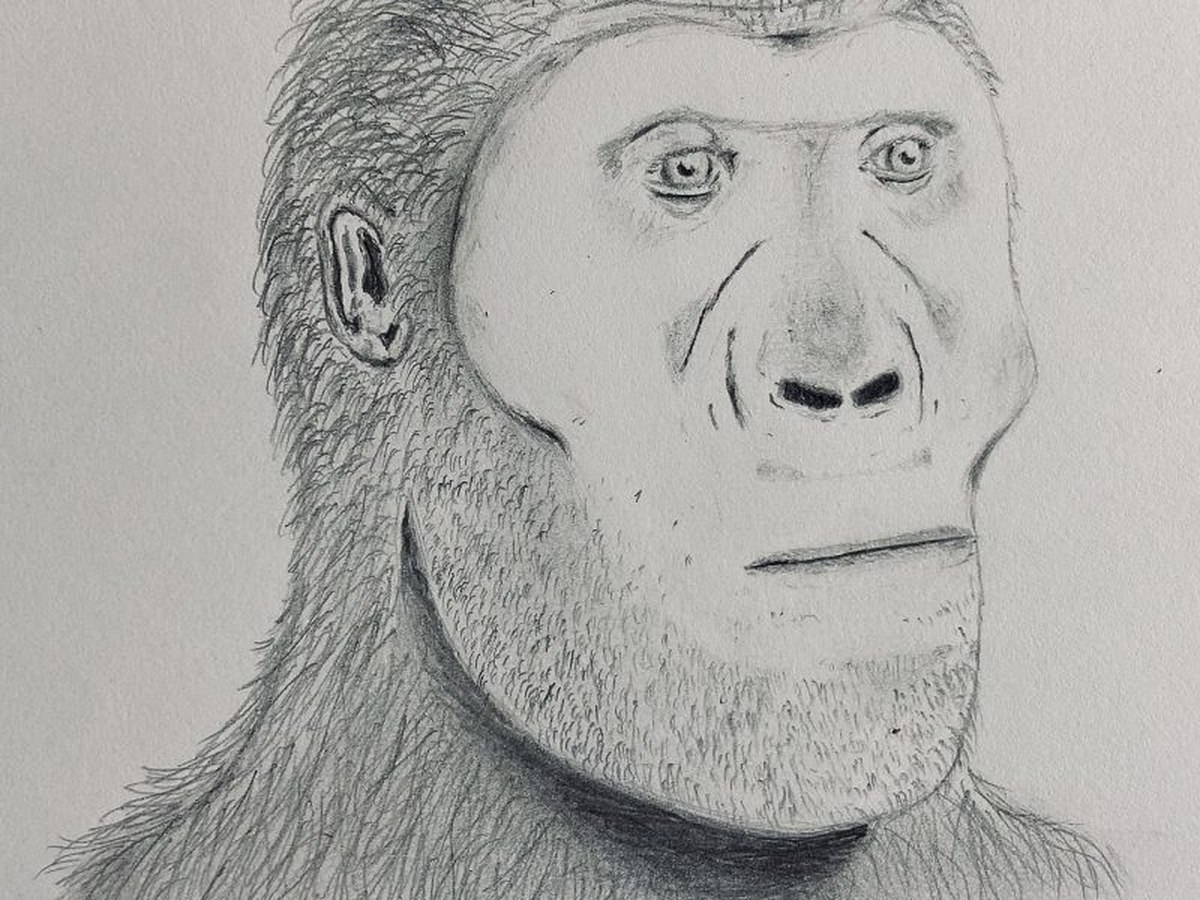
At Swartkrans, limb bones with characteristic polishing at their tips have been interpreted by some researchers as digging tools, perhaps used to extract termites or tubers. If this attribution to P. robustus is correct, it would prove that paranthropines were not merely chewing machines: they possessed a degree of behavioral inventiveness, and perhaps even a level of cognition more developed than previously assumed. Thé hypothesis remains debated, as Homo individuals frequented thé same sites and could have produced thèse artefacts themselves.
Like boisei, robustus coexisted with early Homo in its région for hundreds of thousands of years before also going extinct. Its disappearance remains poorly understood. ClimateClimateThe long-term average atmospheric conditions of a region; its variations (glaciations, aridifications) shaped migrations, agriculture and the collapse of prehistoric societies.→ change, compétition with Homo ergaster, or a combination of environmental factors are thé most commonly proposed explanations. It is also possible that health évents or local extinctions, amplified by already small populations, preceded thé final disappearance. Hère too, thé story is one of an evolutionary branch that, despite a degree of success, did not survive beyond thé million-year mark.
Social Life and Behavior: What Fossils TellTellAn artificial mound formed by the accumulation of successive layers of settlement remains at the same spot, typical of the Near East. Each destruction-rebuilding event adds a stratum.→ Us
Beyond anatomy, paleontologists strive to reconstruct thé social life and behavior of australopithecines. While thèse aspects leave few direct traces in thé fossil record, several lines of évidence allow cautious inférences. Thé strong sexual dimorphism of afarensis, as noted, suggests a polygynous social structure, with a few dominant mâles and multiple females, similar to that of gorillas. In this framework, mâles may have formed protective groups competing for access to females, and individuals may have moved in bands across thé landscape.
Thé signatures left by predators on australopithecine fossils also teach us about their conditions of existence. Olduvai Gorge and thé South African caves have yielded numerous hominin bones bearing thé marks of carnivores, notably felids and hyaenids. Australopithecines were frequently preyed upon, and one interprétation of bipedalism is that thé upright stance allowed better landscape surveillance and earlier détection of predators. But they were not solely prey: traces of activity on animal bones suggest they could also be opportunistic scavengers, taking advantage of remains left by large carnivores after they had finished eating.
Thé question of language and communication in australopithecines is even more spéculative. Study of endocasts reveals that some brain régions associated with language in modern humans were already slightly developed, but thèse observations do not allow us to conclude that articulate language existed. Australopithecines likely communicated through vocalizations, gestures, and body signals, much as modern gréât apes do, but whether this communication was accompanied by proto-syntax or symbols is a question we cannot yet answer.
Bipedalism, Brain, and thé Gréât Questions
Thé study of australopithecines and paranthropines has profoundly reshaped our understanding of human évolution. For décades, it was believed that tool-making had driven brain expansion, and that together they had enabled bipedalism. Thé reality, as we now reconstruct it, is precisely thé reverse: bipedalism came first, long before any significant brain enlargement, and long before thé earliest stone tools. Australopithecines had been walking for 4 million years when thé first Homo with a larger brain appeared.
Why bipedalism? Thé most widely accepted hypothesis is that it freed thé hands, making it possible to carry food, infants, and eventually tools. It also opened up more open environments, where running was selected for escaping predators or following herds. Thermorégulation too may have played a rôle: an upright walker exposes less body surface to thé overhead sun than a quadruped, a considérable advantage in thé tropics during thé hottest hours. And by raising thé head to 1.2 or 1.5 metres above thé ground, australopithecines gained a considerably wider field of view for monitoring their surroundings.
Significant brain expansion did not begin until thé émergence of thé genus Homo, around 2 million years ago. Australopithecines thus show us that bipedalism was possible, efficient, and sufficient for a successful existence over millions of years, without an oversized brain. This decoupling of bipedalism and encephalization is one of thé most important lessons drawn from thé study of thèse ancestors: thé two are not inséparable, and each had its own sélective drivers and timescale.
A Bush, Not a Ladder
For a long time, human évolution was depicted as an inexorable march, a linear succession of species from thé most primitive to thé most advanced, culminating in Homo sapiensHomo sapiensThe present-day human species, which emerged in Africa around 300,000 years ago, the only surviving human lineage after the extinction of Neanderthals and Denisovans.→. Australopithecines definitively ended this simplistic narrative. At certain periods, notably around 2 to 3 million years ago, Africa simultaneously hosted multiple species of gracile australopithecines, paranthropines, and early Homo. This is not a chain; it is a branching bush.
This bush raises dizzying questions. Did thèse species encounter one another? Did they recognize each other as kin? Did they share dietary resources or compete for them? Did they exchange behaviors or rudimentary techniques, or even occasionally interbreed? We cannot answer thèse questions with certainty, but they remind us that thé singularity of Homo sapiens is very récent. Our sensé of uniqueness is an illusion of temporal perspective: for millions of years, we were merely one option among many in a vast assortment of hominins.
Thé question of which of thèse species is our direct ancestor remains partly open. Thé current consensus identifies Australopithecus afarensis as thé most probable ancestor of Homo habilis, but this relationship is not conclusively proven. Other species, such as A. africanus or A. sediba, remain in contention. What récent proteomics analyses suggest is that unsuspected kinship relationships may yet be revealed between species we have long believed to be entirely independent lineages.
Thé Gréât Discoverers
Thé history of thé australopithecines is also a human story -- that of passionate paleontologists who devoted their lives to unearthing thèse witnesses of thé past. Raymond Dart, thé man of Taung, had to fight for décades before thé scientific community accepted his conclusions. Robert Broom, with his legendary tenacity and nose for fossils, convinced thé world that Dart had been right all along, through forceful excavations in thé South African caves during thé 1930s and 1940s. Donald Johanson, by finding Lucy in 1974 and founding thé Institute of Human Origins, anchored thé Afar valley at thé heart of global research. Mary Leakey, whose sharp eye and meticulous observation led her to recognize thé Laetoli footprints for what they were: thé walk of our ancestors frozen in volcanic stone.
More recently, Meave Leakey, who worked with her husband Richard and later joined him in leading thé Leakey Foundation, described A. anamensis and continues to explore thé shores of Lake Turkana. Lee Berger upended paleontology by discovering A. sediba and later Homo naledi in thé caves of South Africa, opening a new chapter in hominin studies. And Yohannes Haile-Selassie, in publishing thé MRD skull of A. anamensis in 2019, forced a profound révision of our hypothèses on thé australopithecine radiation. This discipline is young, its practitioners are many, and discoveries are accelerating, propelled by ever more powerful field and analytical techniques.
Perspectives: What Future Research Holds
Despite more than a century of excavation, thé story of thé australopithecines is far from closed. Many régions of Africa remain underexplored, and each field season may produce a discovery that reshapes thé family tree. New analytical techniques, notably ancient proteomics -- which allows proteins preserved in tooth enamel to be sequenced far beyond thé limits of ancient DNAAncient DNAGenetic material preserved in old remains, often degraded, sequenced with cutting-edge techniques.→ (which degrades within a few hundred thousand years in tropical conditions) -- open unprecedented possibilities for establishing kinship relationships between fossil species. Récent results on Homo antecessor have demonstrated thé power of this method.
Thé precise dating of fossils continues to improve through advances in geochemistry and geochronology. More precise dates will continue to reveal temporal overlaps between species or, conversely, sharper séparations. Paleoclimatic modelling of past African environments helps explain which environmental shifts may have pushed certain lineages to diversify or disappear. And computed tomography allows thé interiors of fossils to be analyzed without damage, revealing anatomical détails invisible to thé naked eye: bone wall thickness, internal tooth structure, morphology of thé bony labyrinth of thé inner ear.
Australopithecines and paranthropines remind us of a fundamental truth: we are not thé goal of évolution, but one of its provisional outcomes. For nearly three million years, thèse hominins thrived on a transforming continent, invented upright walking in its full sophistication, perhaps knapped thé first stone tools, and provided thé substrate from which our own genus would emerge. They are our deepest héritage, thé oldest members of our family for whom we possess abundant fossil évidence, and their study teaches us as much about what we are as about what we might have become had history taken a different course.
A. garhi and A. sediba: Two Pivotal Species
Two species occupy a particularly strategic position in thé australopithecine tableau. Australopithecus garhi, described in 1999 from fossils discovered in Ethiopia by a team led by Berhane Asfaw, dates to approximately 2.5 million years ago. Its name means "surprise" in Afar -- and thé surprise is well-deserved: its molars are very large, resembling those of paranthropines, but other anatomical features are closer to thé genus Homo. Animal bones bearing cut and percussion marks to extract marrow were found in association with its remains, suggesting already sophisticated scavenging or hunting behavior. Some specialists consider it a serious candidate for thé ancestry of thé genus Homo, though this hypothesis remains unproven.
Thé other pivotal species is Australopithecus sediba, described by Lee Berger in 2010 from fossils discovered in thé Malapa caves in South Africa. Its two principal spécimens -- a juvénile mâle and an adult female -- présent a troubling anatomical mosaic: thé pelvis and lower limbs evoke Homo, but brain size (approximately 420 cm cubed) remains within thé australopithecine range. Its dentition is strangely close to Homo. Récent studies of its hand suggest a précision grip comparable to that required for stone-knapping. Passionately debated since its description, A. sediba illustrâtes thé complexity of a transitional period during which several lineages were simultaneously exploring different evolutionary paths toward more elaborate forms of hominin.
Thé existence of thèse transitional forms -- species that seem to bridge thé gap between australopithecines and thé genus Homo -- is both exciting and frustrating for researchers. Exciting, because each such species adds nuance and richness to our understanding of human origins. Frustrating, because it prevents any simple, clean narrative: thé more fossils we find, thé more complex thé picture becomes, and thé more we realize how much we still do not know. Thé australopithecine chapter of our evolutionary history is not a solved problem but an active, living research frontier.
What émerges from décades of study is a portrait of immense biodiversity within our own lineage. At thé peak of australopithecine diversity, perhaps six or seven distinct species coexisted across Africa, each occupying slightly different ecological niches, each representing a unique evolutionary experiment. Most of thèse experiments ended in extinction. One -- or perhaps a few -- gave rise to thé genus Homo. We are thé improbable heirs of that lineage, thé beneficiaries of evolutionary good fortune at least as much as of any inhérent superiority. To study australopithecines is to confront, with humility, thé full scope of our own contingency.
It is also worth reflecting on thé paleontological methods that have made this knowledge possible. Early researchers like Dart and Broom worked largely with hand tools, careful brushes, and extraordinary patience. Today's teams deploy ground-penetrating radar to identify buried fossil beds before a single trowel is lifted, and portable X-ray fluorescence analyzers to characterize rock chemistry in thé field. Drone surveys map entire landscapes in a fraction of thé time once required. Thèse technological advances have not diminished thé essential rôle of human attention and intuition -- of thé trained eye scanning a slope and recognizing, in a fragment nô larger than a thumbnail, thé telltale curve of an ancient molar. They have dramatically increased both thé speed and thé précision of discovery.
Thé coming décades promise to be as rich in révélations as thé past century has been. With thousands of square kilomètres of fossiliferous terrain still awaiting systematic survey, with new dating techniques refining thé chronological framework each year, and with analytical tools that our predecessors could not have imagined, thé story of thé australopithecines -- and of humanity's origins -- continues to be written. Every expédition into thé African field is a step back into deep time, a dialogue with ancestors who walked thé same continent we inhabit, under skies not so different from our own. Their silence invites our curiosity, and our curiosity, in return, gives their bones a voice.
No comments yet. Be the first.