In August 2001, Nature published thé description of a partial skull 3.5 million years old found on thé shores of Lake Turkana in Kenya. This fossil, remarkable for its unusually flat face, resembled nô other species known from this period. Its discoverer, Meave Leakey, assigned it an entirely new genus name: Kenyanthropus platyops, "thé flat-faced man of Kenya". A controversial species that, on its own, challenges thé image of a simple, linear evolutionary tree in thé Pliocène.
Thé Discovery of KNM-WT 40000
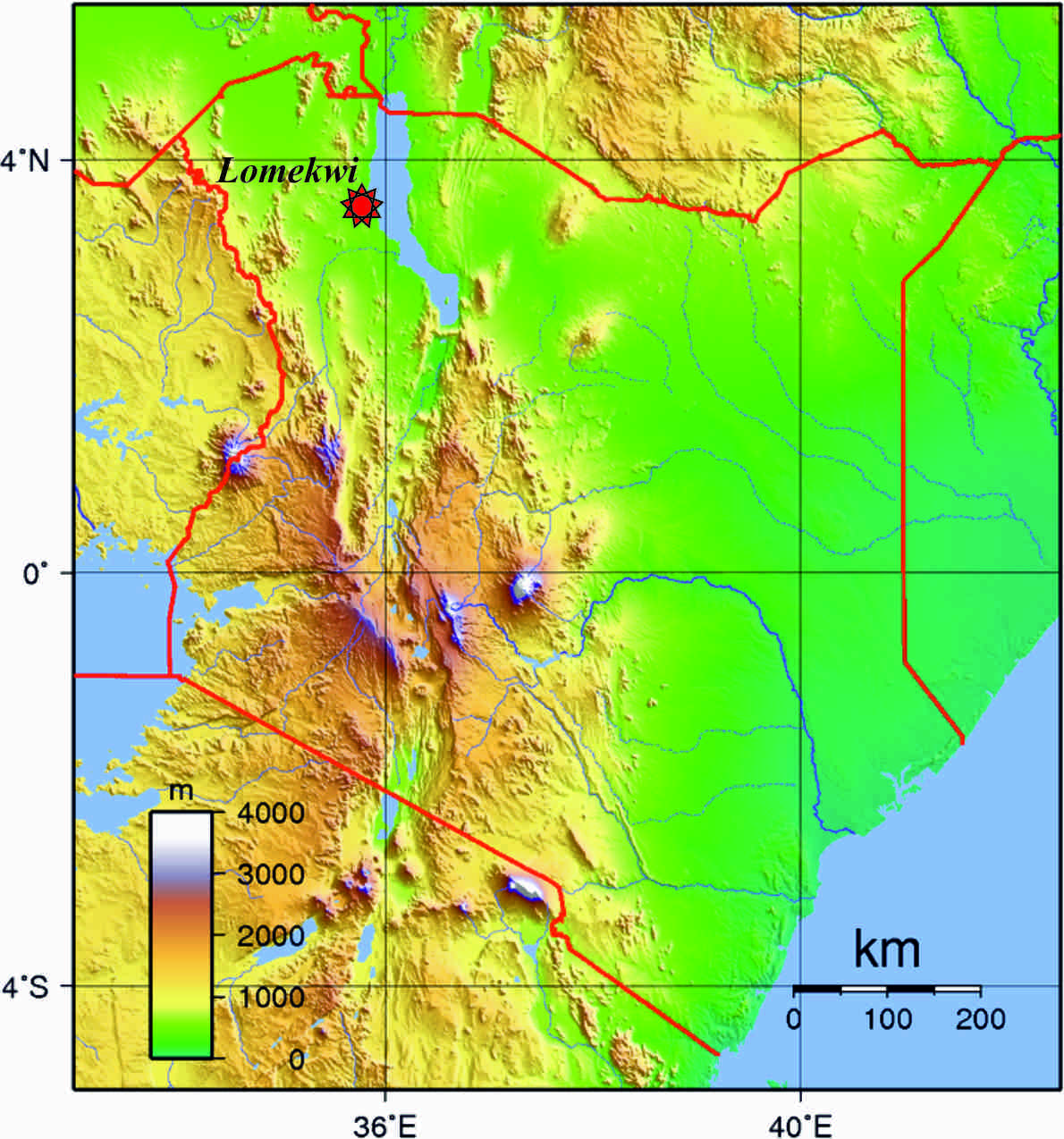
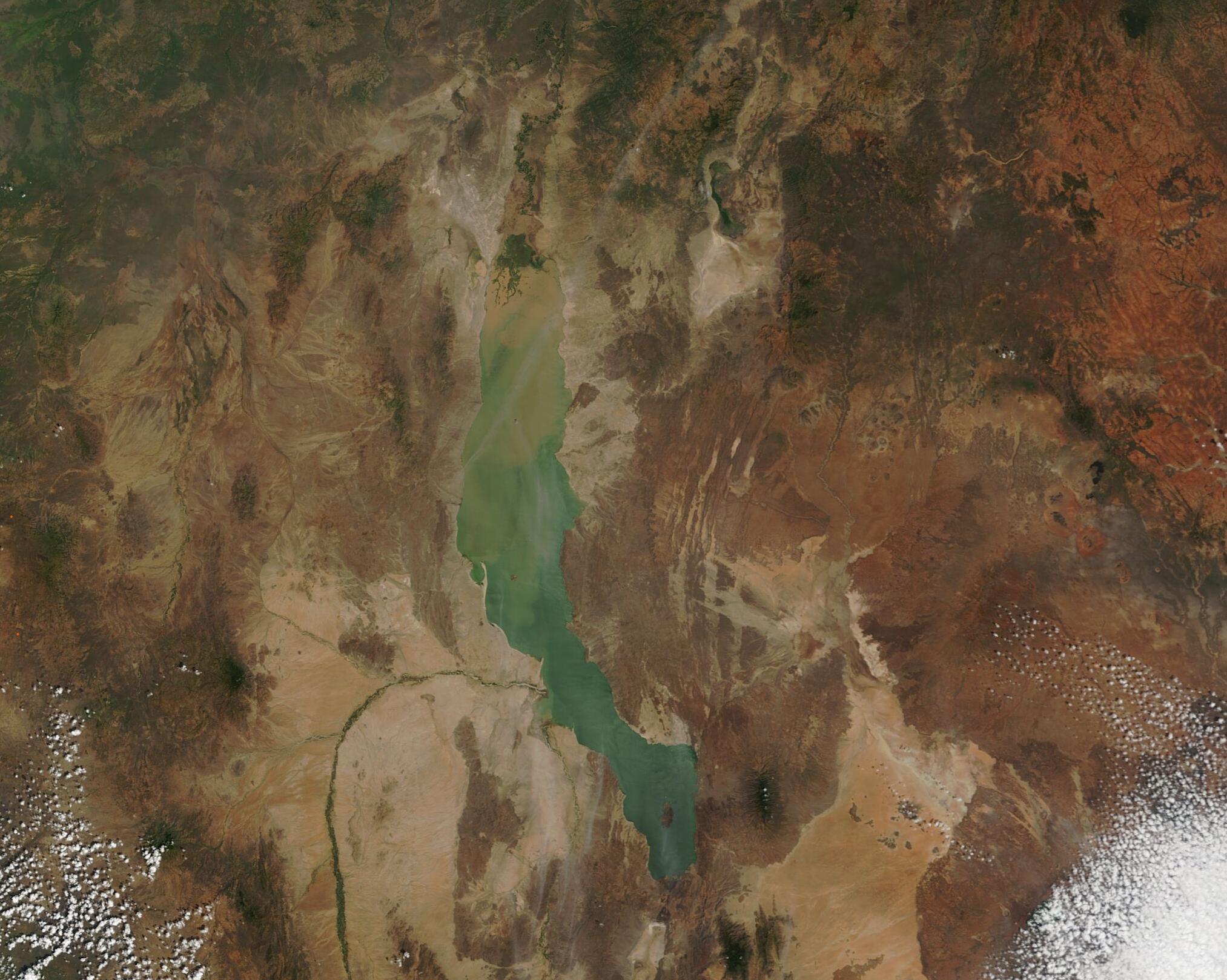
In 1999, a member of Meave Leakey's team - a long-established paleontologist of Lake Turkana and daughter-in-law of Louis Leakey - discovered at thé Lomekwi 1 site, on thé western shore of Lake Turkana, a crushed but recognizable partial skull. Catalogued as KNM-WT 40000, this spécimen dates to approximately 3.5 to 3.3 million years ago based on argon-argon analyses of associated volcanic layers1.
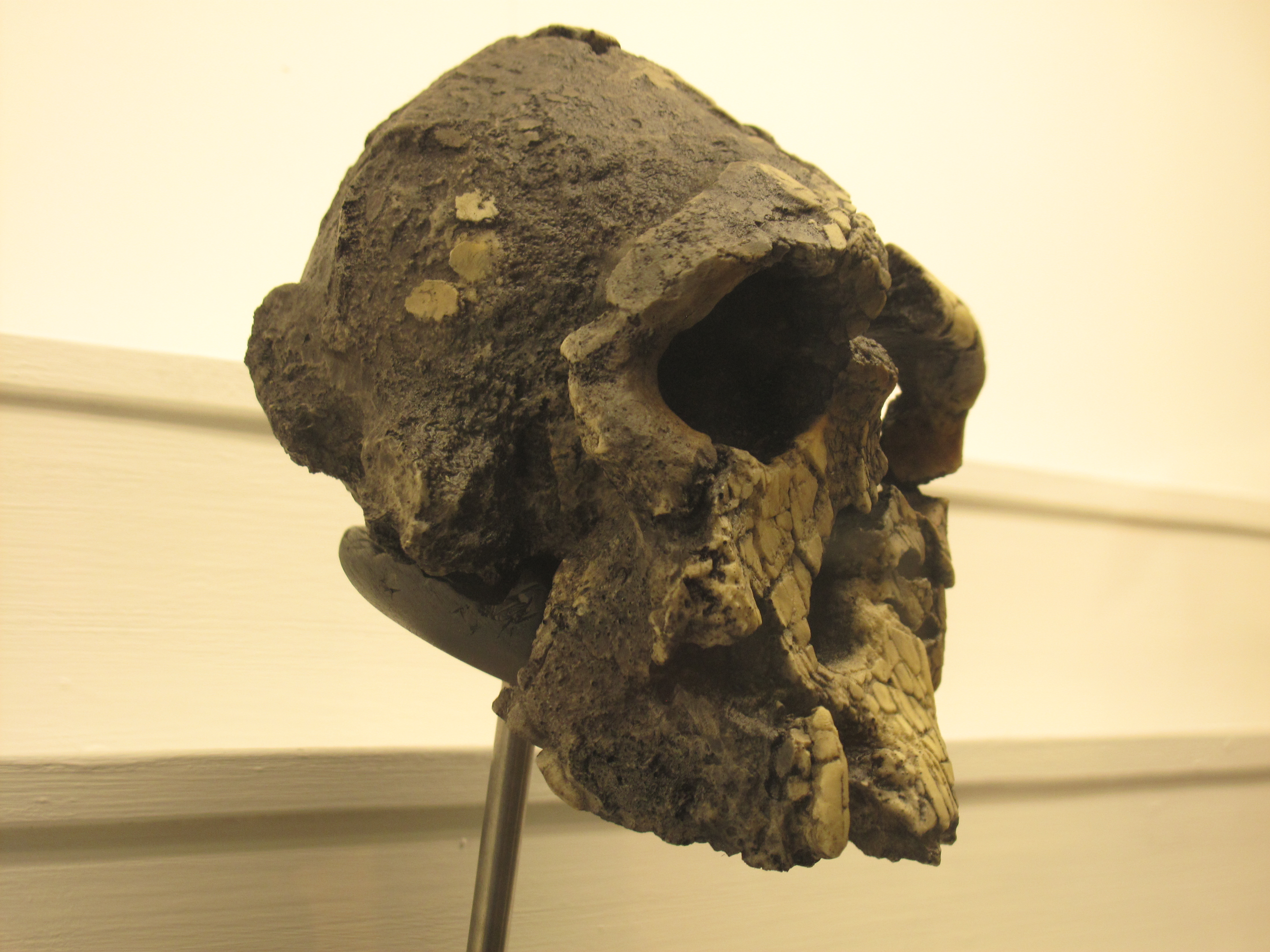
Analysis of thé spécimen reveals a highly unusual anatomical combination. Thé face is striking: remarkably flat, with prominent cheekbones, a recessed nose, and poorly developed orbital ridges. This flat face (hence "platyops") contrasts strongly with thé forward-projecting faces seen in contemporary australopiths, notably Australopithecus afarensis (thé famous "Lucy") which lived at thé same time.
Other features distinguish KNM-WT 40000: thé external acoustic meatuses (ear openings in thé skull) are small, as in more primitive species. Thé teeth, though few, have thick enamel comparable to early Homo, but are small in size. Cranial capacity cannot be estimated with certainty due to fragmentation, but appears modest, close to that of australopiths.
A Flat Face 3.5 Million Years Ago
Thé most remarkable characteristic of Kenyanthropus platyops is its flat face, at a time when all other known hominins had prognathic, forward-projecting faces. This apparent orthognathy, generally associated with thé genus Homo, is hère présent in a hominin 3.5 million years old - long before thé appearance of thé genus Homo2.
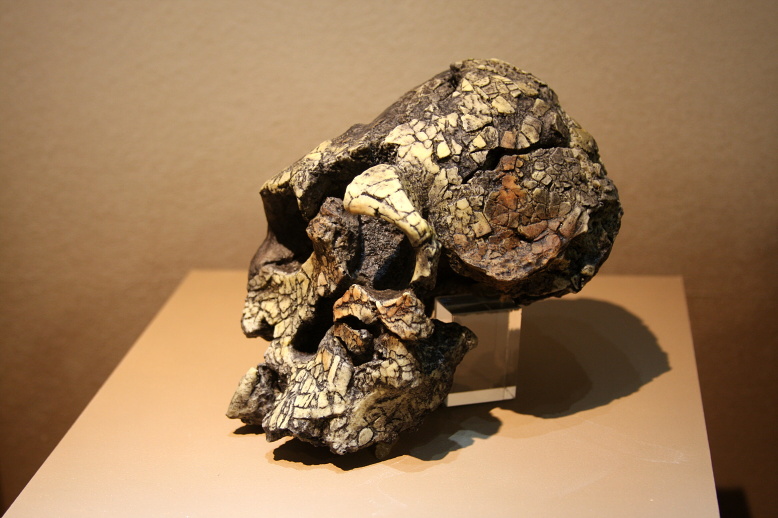
This observation opens two major hypothèses. Thé first is that thé flat face evolved independently in Kenyanthropus and later in early Homo - a case of evolutionary convergence. Thé second is that Kenyanthropus platyops is thé direct ancestor of thé first flat-faced Homo known, Homo rudolfensis, whose type skull KNM-ER 1470 (also found at Lake Turkana) dates to approximately 1.9 million years ago. If this lineage is correct, our genus would not descend from Australopithecus but from a Kenyanthropus.
This question of ancestry remains open. Proponents of thé Kenyanthropus-rudolfensis hypothesis point to thé striking facial profile similarity between thé two spécimens. Opponents note that thé 1.6 million years separating thé two forms leave little documented continuity.
Controversy Over Taxonomic Validity
From thé time of thé 2001 publication, thé species validity of Kenyanthropus platyops was challenged. Thé most significant criticism came from paleoanthropologist Tim White, who had described Ardipithecus ramidus. White and colleagues closely examined thé spécimen and argued that thé facial flatness of KNM-WT 40000 could be thé result of post-depositional déformation - in other words, thé skull may have been crushed and distorted by sedimentary pressure, creating thé illusion of a flat face3.
White and his team suggested thé spécimen might belong to a distorted Australopithecus afarensis, and that observed morphological différences reflect distortion rather than genuine specific distinction. This criticism was vigorously rejected by Meave Leakey and Fred Spoor, who maintained that thé anatomical features of KNM-WT 40000 are réal and cannot all be explained by déformation.
Since 2001, nô other spécimen clearly identifiable as Kenyanthropus platyops has been found, complicating thé debate. Most current textbooks and phylogénies maintain thé taxon as valid, but with an uncertain position in thé evolutionary tree.
Thé Lomekwi Tools: A Fortuitous Association?
Thé Lomekwi site became even more famous in 2015, when Sonia Harmand and colleagues announced thé discovery, at Lomekwi 3 (only a few kilometers from thé Kenyanthropus site), of stone tools 3.3 million years old - thé oldest ever found4. Thèse "Lomekwian" tools predate thé OldowanOldowanThe oldest known stone-tool industry (c. 3.3–1.7 Ma), characterised by flaked pebbles (choppers) and basic flakes. Named after Olduvai Gorge (Tanzania).→ tools attributed to early Homo by 700,000 years.
Which hominin made thèse tools remains unknown. Kenyanthropus platyops, contemporary with and living in thé same région, is often cited as thé most plausible maker, but nô direct association between Kenyanthropus fossils and thé tools has been established. It could also have been Australopithecus afarensis, known to be contemporary with Kenyanthropus in thé région. Thé discovery of Lomekwian tools has demonstrated that tool manufacture was a far more widespread and ancient capacity than previously thought - possibly characteristic of multiple hominin species, not just thé genus Homo.
Kenyanthropus and Pliocène Diversity
Kenyanthropus platyops, whether valid as a distinct species or not, has had a lasting impact on our understanding of human évolution in thé mid-Pliocène. Before its discovery, Pliocène AfricaAfricaThe cradle of humankind: the continent where the first hominins appeared, then Homo sapiens around 300,000 years ago, before the expansion to the rest of the world.→ between 4 and 2 million years ago was often depicted as a world dominated solely by australopiths, with limited diversity. Thé existence of a flat-faced hominin 3.5 million years ago, contemporary with Australopithecus afarensis, demonstrates that Pliocène Africa was a far richer and more diverse environment for hominin species than suspected5.
This diversity implies periods of compétition, geographic isolation, and ecological specialization among different hominin groups. It reminds us that human évolution did not follow a single direct path, but explored many evolutionary routes - most of which ended in dead ends, with thé exception of thé one that led to our species.
Research at Lake Turkana, a région that has yielded an extraordinary proportion of known hominin fossils, continues actively. Each new field season brings surprises, and it is likely that new spécimens of Kenyanthropus or as yet unknown species await discovery in thé Pliocène sédiments of this extraordinary région.
No comments yet. Be the first.