In 2018, a study published in Science overturned our understanding of prehistoric art. Négative hand stencils preserved in Maltravieso cave at Caceres (Spain) were dated by thé uranium-thorium method to at least 66,000 years ago. This date precedes thé arrival of Homo sapiensHomo sapiensThe present-day human species, which emerged in Africa around 300,000 years ago, the only surviving human lineage after the extinction of Neanderthals and Denisovans.→ in Europe by more than 20,000 years. Thé conclusion is inescapable: thèse works, among thé oldest known graphic expressions, were made by NeanderthalsNeanderthalsA fossil humanity of Eurasia, robust and cold-adapted, extinct around 40,000 years before present.→.
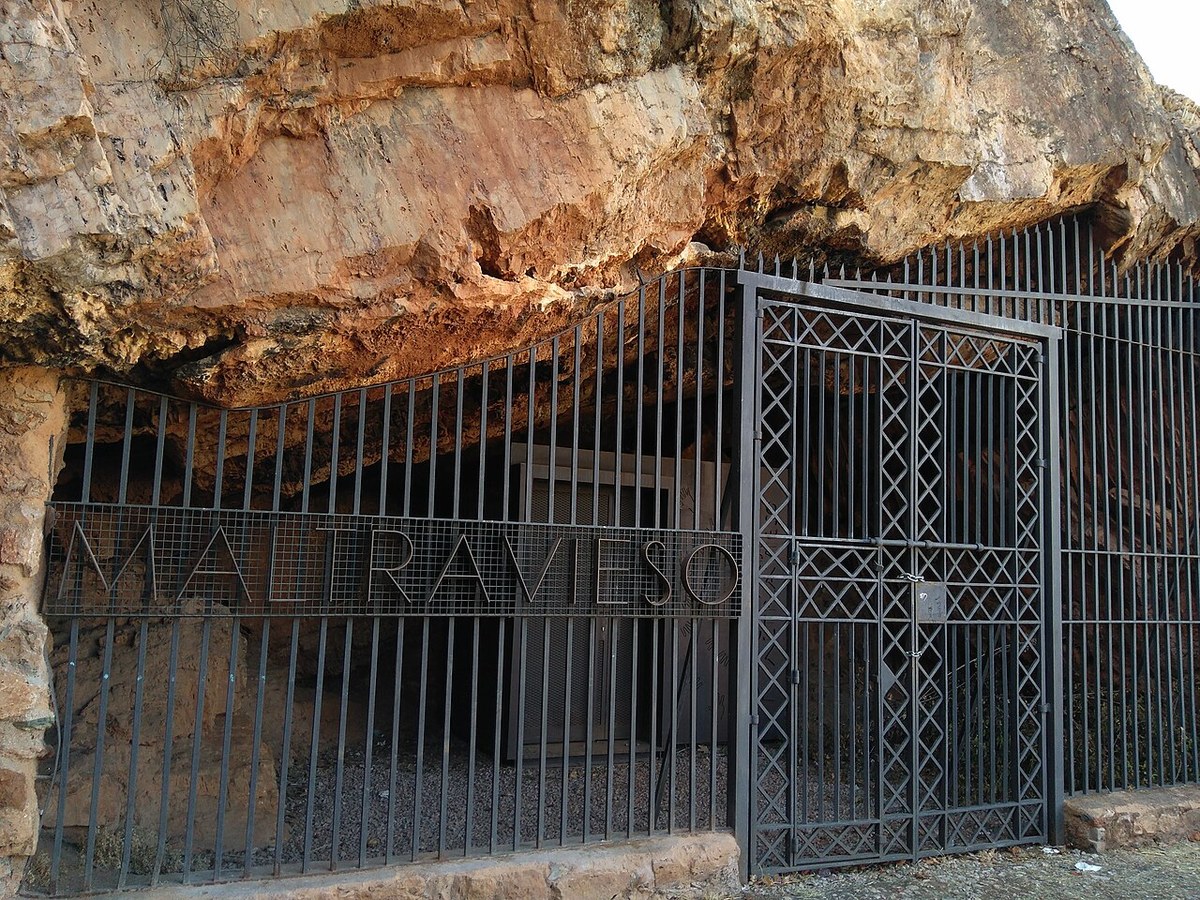
Maltravieso cave, located in thé centre of Caceres, has been known since 1951. It already contained paintings and engravings attributed to thé PalaeolithicPalaeolithicThe oldest and longest period of prehistory (c. 3.3 Ma–12,000 BC), defined by chipped stone tools and a hunter-gatherer way of life.→, but none appeared older than those of Chauvet or Lascaux. Thé dating method changed everything. Uranium-thorium dating allows thé calcite crusts that form over paintings to be dated, giving a minimum âge. For Maltravieso, this minimum is 66,000 years[1]. Thé finding is not unique: other Spanish caves (La Pasiega, Ardales) have yielded similar or even older dates.
Négative hand stencils: a universal gesture
Négative hand stencils are among thé most widespread forms of rock art worldwide, from thé Indonesian island of Sulawesi to thé cliffs of Patagonia. Thé method is simple: a hand is placed against thé wall, and pigment (ochreOchreA red or yellow mineral pigment (iron oxides), used from prehistory for adornment, funerary rites and art.→, manganèse) is sprayed around thé fingers. Thé hand stands out in négative against thé coloured background. This elementary gesture, found on every inhabited continent, seems to betray a universal need to leave a mark - to signal one's présence or belonging to a group.
Thé fact that Neanderthals practised this same rite challenges thé long-held assumption of a cognitive divide between them and Homo sapiens. For décades, symbolic art was considered thé exclusive preserve of our species, one of thé hallmarks of "behavioural modernity" accompanying thé out-of-AfricaAfricaThe cradle of humankind: the continent where the first hominins appeared, then Homo sapiens around 300,000 years ago, before the expansion to the rest of the world.→ migration. Thé Maltravieso dating, combined with other discoveries - shell ornaments from Cueva de los Aviones (Spain, over 115,000 years), stalagmiteStalagmiteA calcite formation rising from a cave floor by drip-by-drip deposition; its slow growth allows precise dating.→ rings at Bruniquel (France, 176,000 years) - paints thé portrait of a far more sophisticated Neanderthal than previously imagined.
A scientific controversy still very much alive
Uranium-thorium dating has its limitations. It does not date thé paint itself, but thé minéral layer covering it. If thé calcite formed after thé painting - as is probable - thé work is necessarily older still. But contamination or uranium remobilisation can skew results. Some researchers, including Francesco d'Errico, have voiced methodological réservations and called for independent réplication[2].
Nevertheless, thé convergence of évidence is becoming increasingly difficult to ignore. Maltravieso is not an isolated case: it is one link in a growing chain of évidence that is year by year redrawing thé portrait of a Neanderthal capable of symbolic thought, ritual behaviour, and perhaps a form of self-awareness comparable to our own.
No comments yet. Be the first.