For a long time, paleoanthropologists had to make do with bones and teeth to reconstruct the history of our distant relatives. The molecule itself seemed out of reach: DNADNAThe molecule carrying genetic information, used to reconstruct kinship between species.→, the carrier of heredity, degrades quickly, especially in warm climates, so much so that the oldest known African homininHomininMember of the subtribe Hominina, comprising the human lineage (Homo, Australopithecus, Paranthropus…) but excluding orangutans and gibbons. The term progressively replaces "hominid" in its narrow sense.→ DNA barely exceeds eighteen thousand years. Beyond that lay molecular silence. A study led by Palesa Madupe, Enrico Cappellini and their colleagues at the University of Copenhagen has just pushed back that frontier in spectacular fashion, by reading not DNA but fossil proteinspalaeoproteomicsPalaeoproteomicsThe study of ancient proteins preserved in fossils (bone, tooth enamel); can reveal species or sex when DNA is gone.→The study of ancient proteins preserved in fossils; more resistant than DNA, they allow remains to be identified where the genome has vanished.→ preserved in the enamel of four Paranthropus robustusParanthropusA genus of fossil hominins known as robust australopithecines, with a powerful chewing apparatus, that lived in AfricaAfricaThe cradle of humankind: the continent where the first hominins appeared, then Homo sapiens around 300,000 years ago, before the expansion to the rest of the world.→ about two to one million years ago.→ teeth about two million years old1.
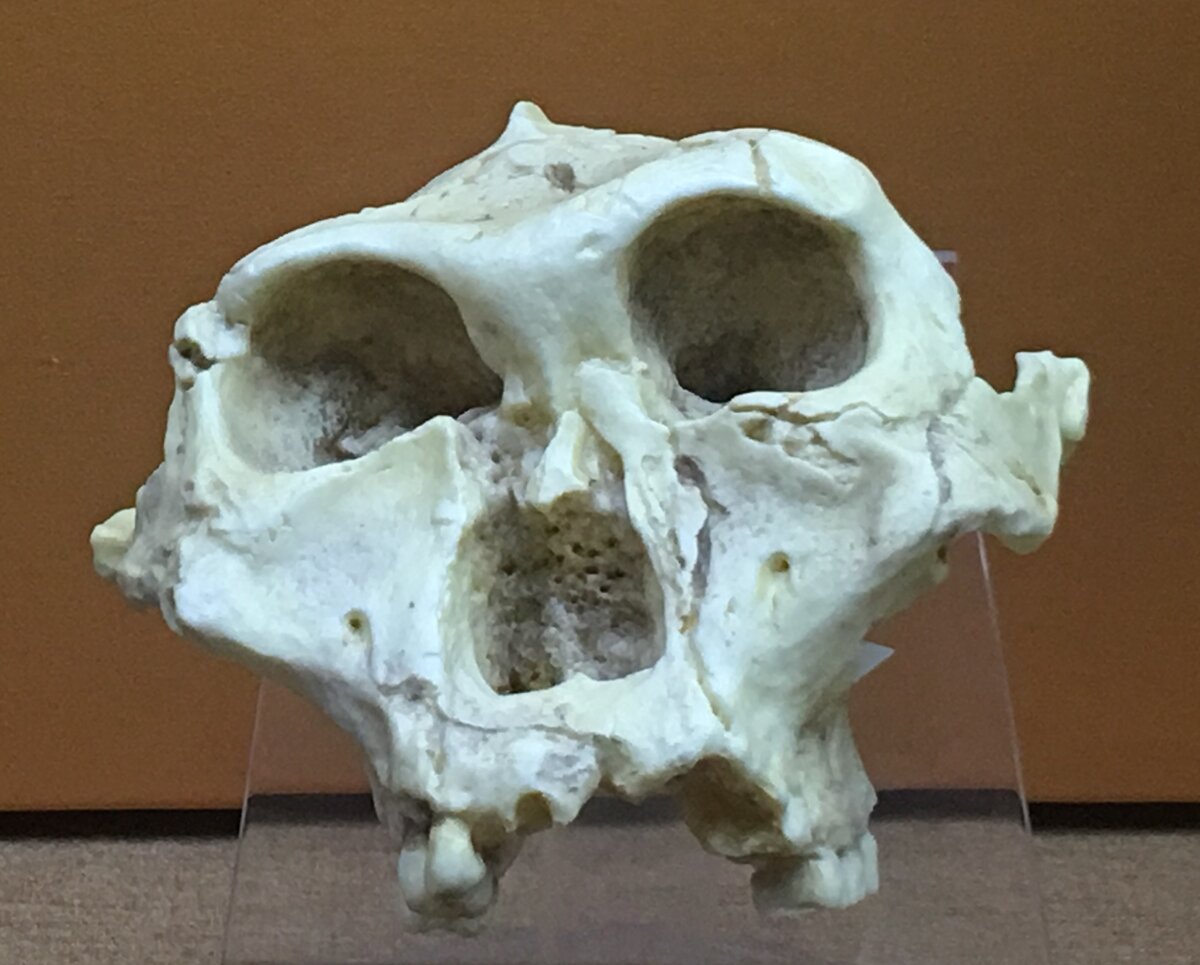
The teeth come from Swartkrans, one of the great fossil sites of the Cradle of HumankindCradle of HumankindA karstic area northwest of Johannesburg, inscribed by UNESCO, among the richest deposits of human fossils in the world.→, near Johannesburg. The feat lies not only in the dizzying age of these molecules, by far the oldest ever obtained from a hominin. It lies also in what they reveal: the place of Paranthropus in the human tree, the biological sex of two individuals, and perhaps even an unsuspected diversity within the species. All of it with an openly stated caution, for the authors are the first to underline the limits of what these sequences allow, for now, to be asserted.
The work is the fruit of an international collaboration bringing together specialists in ancient proteomics, South African paleoanthropologists and fossil conservation teams. Palesa Madupe, herself South African, led a project that brings her country's own fossils home to extract from them information of an entirely new kind. For taking material from such rare pieces is no trivial matter: a fragment of enamel must be sacrificed, ground down, and its proteins extracted without contaminating them with the ever-present proteins of modern handlers. Every step was therefore surrounded by strict controls meant to ensure that the sequences read truly came from the fossil hominin, and not from laboratory or environmental contamination.
A robust cousin of the human lineage
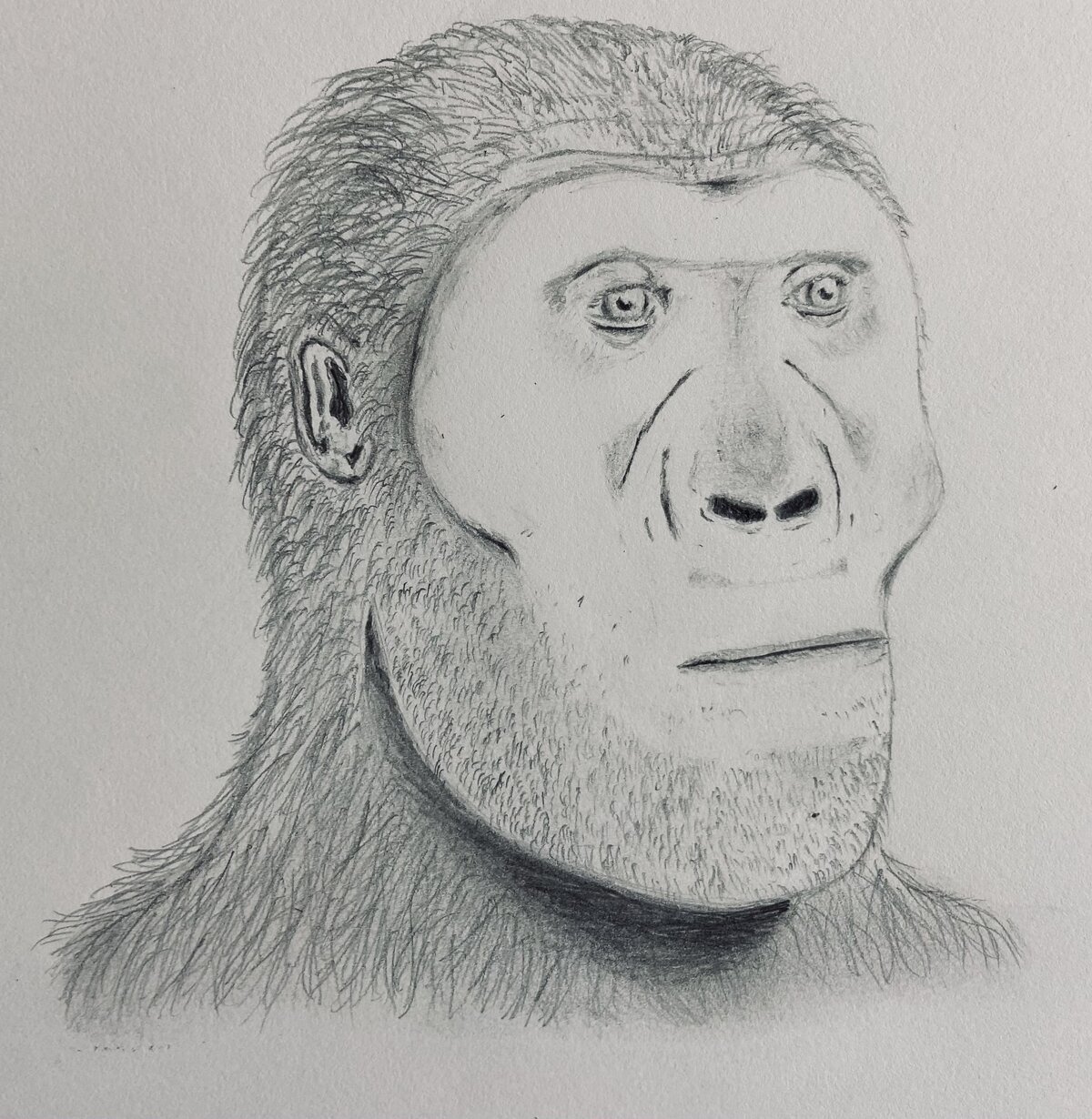
Paranthropus robustus is not a direct ancestor but a collateral relative, a branch of the human tree that flourished in southern Africa between roughly two million and one million years ago and then went extinct. It is recognized by its highly specialized anatomy: a massive face, powerful chewing muscles anchored to a bony crest atop the skull, and above all enormous molars sheathed in thick tooth enameltooth enamelThe hardest tissue in the body, laid down in rhythmic layers during tooth formation that preserve a precise memory of time.→, suited to a tough diet of roots, tubers and abrasive plants. These traits earned it the label robust, in contrast to the so-called gracile australopithecines.
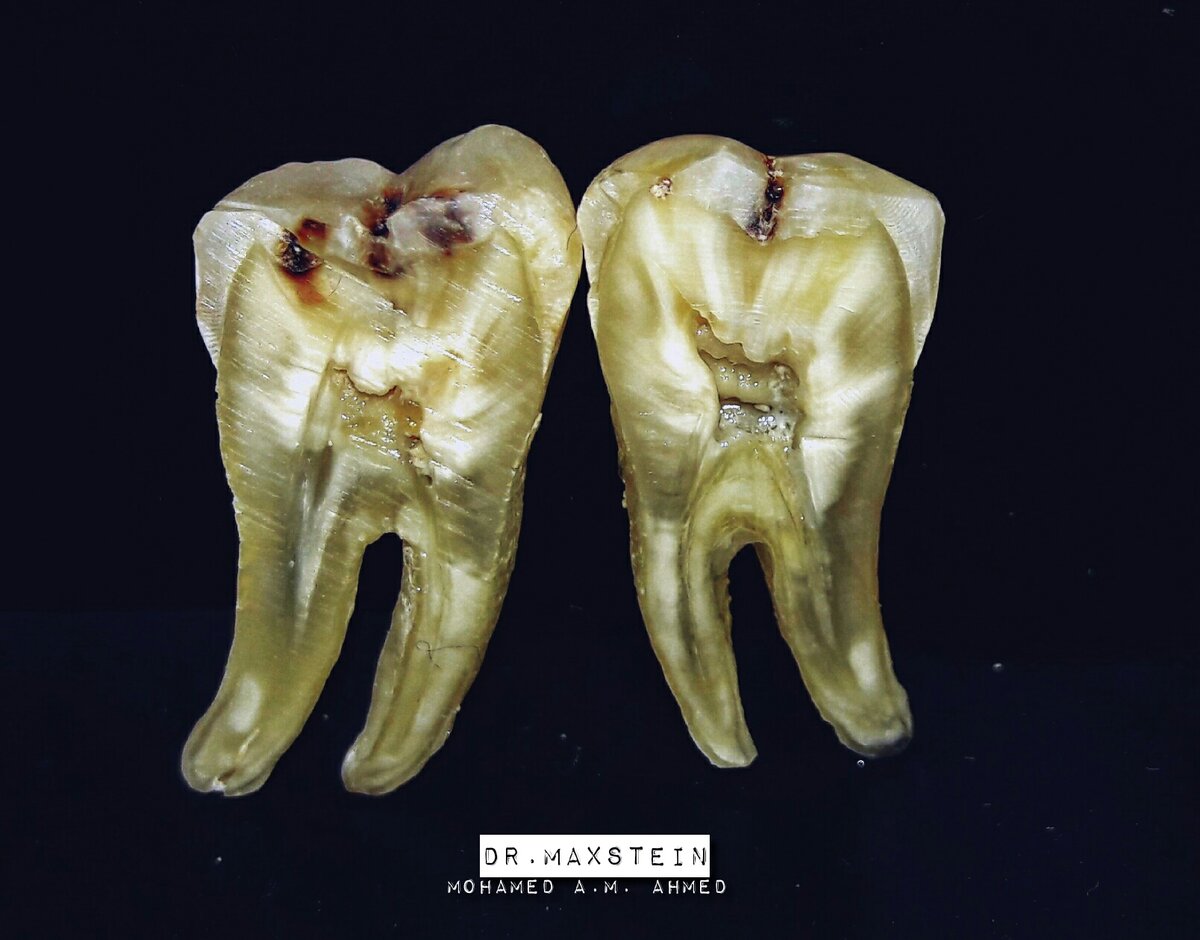
Yet it is precisely this thick enamel that made the achievement possible. The hardest and most mineralized tissue in the body, enamel is more than 95 percent mineral, but it also holds, in very small amounts, the proteins that served as a scaffold for its formation. Once the mineral has crystallized around them, these proteins find themselves literally imprisoned in the biological rock of the tooth. Sheltered from the water, bacteria and enzymes that destroy DNA, they can survive far longer than genetic material. The question was whether, after two million years in a warm temperate climateClimateThe long-term average atmospheric conditions of a region; its variations (glaciations, aridifications) shaped migrations, agriculture and the collapse of prehistoric societies.→, enough of them remained to be read.
Swartkrans, a trap that sealed time
The answer owes much to the very particular geology of SwartkransSwartkransA fossil-bearing cave in the Cradle of Humankind, South Africa, rich in remains of Paranthropus robustus and early tools.→. Like many southern African sites, it is not a dwelling but an ancient network of karstic cavities in which bones and sediments accumulated before being turned into hard rock. The teeth studied were not gently laid down: they were swept in and heaped up by violent floods, true flows of mud and debris that carried fragments of animals and hominins down into the depths of the cave.
This rapid burial, followed by a massive cementation that sealed the sediments into a compact breccia, played a decisive protective role. By encasing the teeth in a stable mineral matrix, the rock isolated them from the water infiltration and chemical changes that elsewhere would have finished off the fragile molecules. It is this conjunction of chance events, a natural trap, floods, then a rapid setting into stone, that explains how proteins could cross two million years where, in ordinary soil, they would long since have vanished. Swartkrans did not merely yield fossils; it worked as a molecular strongbox. The lesson reaches beyond this single site: it suggests that the survival of such molecules depends less on the age of a fossil than on the precise history of its burial, and that other caves of the Cradle of Humankind, with comparable taphonomyTaphonomyThe study of the processes affecting organic remains between death and fossilisation, including the marks left by predators.→, might one day hold similar treasures.
Reading proteins instead of DNA
The method used belongs to palaeoproteomicspalaeoproteomicsThe study of ancient proteins preserved in fossils; more resistant than DNA, they allow remains to be identified where the genome has vanished.→, a young discipline that sequences ancient proteins rather than DNA. Its principle rests on mass spectrometryMass spectrometryA technique that measures the mass of molecular fragments very precisely in order to reconstruct their composition, here the sequence of proteins.→: the tiny protein fragments still present in a sample are extracted, broken into pieces, and their mass is measured very precisely. From these measurements, a sophisticated instrument reconstructs the order of the amino acids, the elementary links that make up each protein. For each Paranthropus tooth, the researchers were thus able to reconstruct hundreds of amino acids, molecular information of an unhoped-for richness for so ancient a remain1.

The value of this approach becomes obvious when compared with ancient DNAAncient DNAGenetic material preserved in old remains, often degraded, sequenced with cutting-edge techniques.→. The latter revolutionized the study of NeanderthalsNeanderthalsA fossil humanity of Eurasia, robust and cold-adapted, extinct around 40,000 years before present.→ and Denisovans, but it preserves poorly, and almost never in warm climates: in Africa, the oldest human DNA recovered is only around eighteen thousand years old. Proteins, by contrast, are far more chemically stable and survive, in the right conditions, over incomparably longer timescales. Enamel proteins had already been read in the fossil great ape Gigantopithecus, close to two million years old4, and in Homo antecessor, in Europe, around eight hundred thousand years3. But obtaining such sequences from a two-million-year-old African hominin, in a climate reputed hostile to molecular preservation, was another matter entirely. It is this window onto a deep past, well beyond anything DNA will ever reach, that gives the study its reach.
What the sequences reveal: kinship and sex
The sequences obtained bring first a confirmation that was expected, yet never before demonstrated at the molecular level: Paranthropus robustus does indeed belong to the human family. Compared with the homologous proteins of modern humans, Neanderthals, Denisovans and living great apesgreat apesThe family of great apes (Hominidae) comprising orangutans, gorillas, chimpanzees, bonobos and humans.→, the Paranthropus sequences fall within the hominins, in the position of an outgroup to the branch uniting Homo sapiensHomo sapiensThe present-day human species, which emerged in Africa around 300,000 years ago, the only surviving human lineage after the extinction of Neanderthals and Denisovans.→, the Neanderthals and the Denisovans1. In other words, Paranthropus is confirmed as a distant cousin, firmly anchored in our extended family, but sitting on a branch distinct from the one that leads to us. The point may seem modest, since the anatomy had long suggested as much, but there is a difference in kind between a resemblance read from the shape of bones and a relationship read from the molecules themselves. For the first time, the kinship of an African hominin this ancient rests on something other than the eye of the anatomist.
The proteins identified are, moreover, no random assortment. They are the ones involved in making enamel itself, foremost among them amelogenin and enamelin, whose genes are well known in humans and living great apes. Having their counterparts in Paranthropus allows point-by-point comparisons, amino acid by amino acid, along the protein chain. It is from this fine reading that the study's three lessons flow, kinship, sex and variability, each resting on differences that are sometimes minute but made legible by the precision of modern mass spectrometry.
The second result is perhaps the most concrete. Thanks to a peptide from the amelogenin gene carried on the Y chromosome, the researchers were able to determine the biological sex of certain individuals. The presence of this male version of amelogeninAmelogeninA protein central to enamel formation, with one version carried on the X chromosomeX chromosomeOne of the two sex chromosomes, present in two copies in females and a single copy in males.→ and another on the Y, used to determine sex.→, called AMELY, marks a male individual; its absence, combined with the X chromosome form alone, points to a female. Two of the specimens were thus identified as males on the strength of this Y chromosome peptide, while the other two were assigned, more cautiously, to females. The striking point is that one of these male teeth had previously been classed as female, solely because of its small size. Proteomics therefore corrected an attribution based on bone or tooth dimension alone, a notoriously misleading method, and showed that it can sex a fossil far more reliably.
An unexpected variability, and openly stated limits
The third lesson is at once the most intriguing and the most fragile. Examining the tiny amino acid differences from one tooth to another, the team noticed that one of the four individuals seemed to stand apart from the other three more than those three differ among themselves. Two fossils shared a variation also present in humans, chimpanzees and gorillas, while another carried a version so far unique to Paranthropus. This divergence could betray an unsuspected variability within the species, or even the presence of subgroups, or of several distinct forms, within southern African Paranthropus1. The hypothesis is stimulating, for it would touch on an old question: does the diversity of South African fossils reflect a single highly variable species, or several poorly separated species? But the authors present it as a lead to be confirmed, not as a conclusion. A single differing amino acid, on a partial protein and a sample of four individuals, is obviously not enough to redraw the taxonomy of the genus; it signals only that a variation exists, and that it deserves to be tracked across many more specimens.
This is where the caution that marks the whole study comes in. Enamel proteins, precious as they are, contain only a minute fraction of the information a complete genome would offer. They are enough to place Paranthropus roughly among the hominins and to settle the question of sex, but they do not yet allow the species to be located precisely in the human tree, nor to say with certainty how many lineages hide behind the Swartkrans fossils. The kinship relations between Paranthropus and the other hominins remain complex, and it will take other specimens, other proteins, to untangle them.
This work should therefore be read for what it is: a breakthrough that is above all methodological. It proves that African fossil enamel can yield, after two million years, usable molecules, where DNA gave up long ago. By shifting the frontier of molecular biology from a few tens of thousands of years to several million, palaeoproteomics opens entirely new ground. One can imagine, in time, applying the same approach to other ancient hominins of the East African and southern African record, provided contexts of preservation as favorable as that of Swartkrans can be found. Such contexts may prove rare, and each tooth sampled is lost to future analyses, so the method will have to be deployed sparingly, on carefully chosen specimens, rather than scaled up like the sequencingSequencingReading the order of the bases (A, T, G, C) of a DNA molecule; high-throughput sequencing reads millions of fragments in parallel.→ of ancient DNA. The definitive answers about the exact place of Paranthropus in our history are not here yet; but for the first time, it is the very molecules of these two-million-year-old creatures that are beginning to speak, and it is by patiently multiplying samples, not by overreading the first ones, that this young science will deliver on its promise.
No comments yet. Be the first.