At Pré-Pottery NeolithicNeolithicThe "New Stone Age": a period marked by farming, herding, settlement and pottery, from around 10,000 BC.→ Levantine sites -- Jericho, Ain Ghazal, Kfar Hahoresh, Nahal Hemar -- excavators have unearthed skulls and bones coated in lime plaster, sometimes pigmented with ochreOchreA red or yellow mineral pigment (iron oxides), used from prehistory for adornment, funerary rites and art.→, their orbits inlaid with shells to recreate thé appearance of eyes. Thèse "portrait skulls" are among thé most striking funerary manifestations in all of world prehistoryPrehistoryThe span of human history before the invention of writing, from the Palaeolithic to the Metal Ages, known mainly through material remains.→. But how, exactly, did thé living treat their dead before plastering them? At what stage of décomposition was thé plaster applied? Why were some bodies entirely coated and others only at thé skull? A 2026 study published in Archaeological and Anthropological Sciences1 provides thé first expérimental answers to thèse questions, after 58 months of taphonomic monitoring of plaster-encased bodies in conditions approximating those of thé Levantine Neolithic.
Plaster burials of thé Pré-Pottery Neolithic
Thé Pré-Pottery Neolithic A and B (PPNA and PPNB) of thé LevantLevantA region of the eastern Mediterranean Near East (Israel, Lebanon, Syria, Jordan), a major crossroads of the first human migrations out of Africa.→, between approximately 10,000 and 7,000 BCE, corresponds to one of thé most profound transitions in human history: thé shift from hunting-gathering to agricultureAgricultureThe cultivation of plants and production of food by working the soil, which emerged in the Neolithic in the Near East and independently elsewhere; it radically transformed human societies.→, thé construction of thé first permanent villages, and thé émergence of new forms of religion and ritual. Thé funerary practices of this period reflect a new and intense relationship with thé dead: burialBurialThe intentional deposition of a body, sometimes with offerings; a marker of symbolic behaviour.→ beneath house floors, secondary exhumation of skulls for rétention in thé living space, and elaborate skull décoration with plaster and shells.
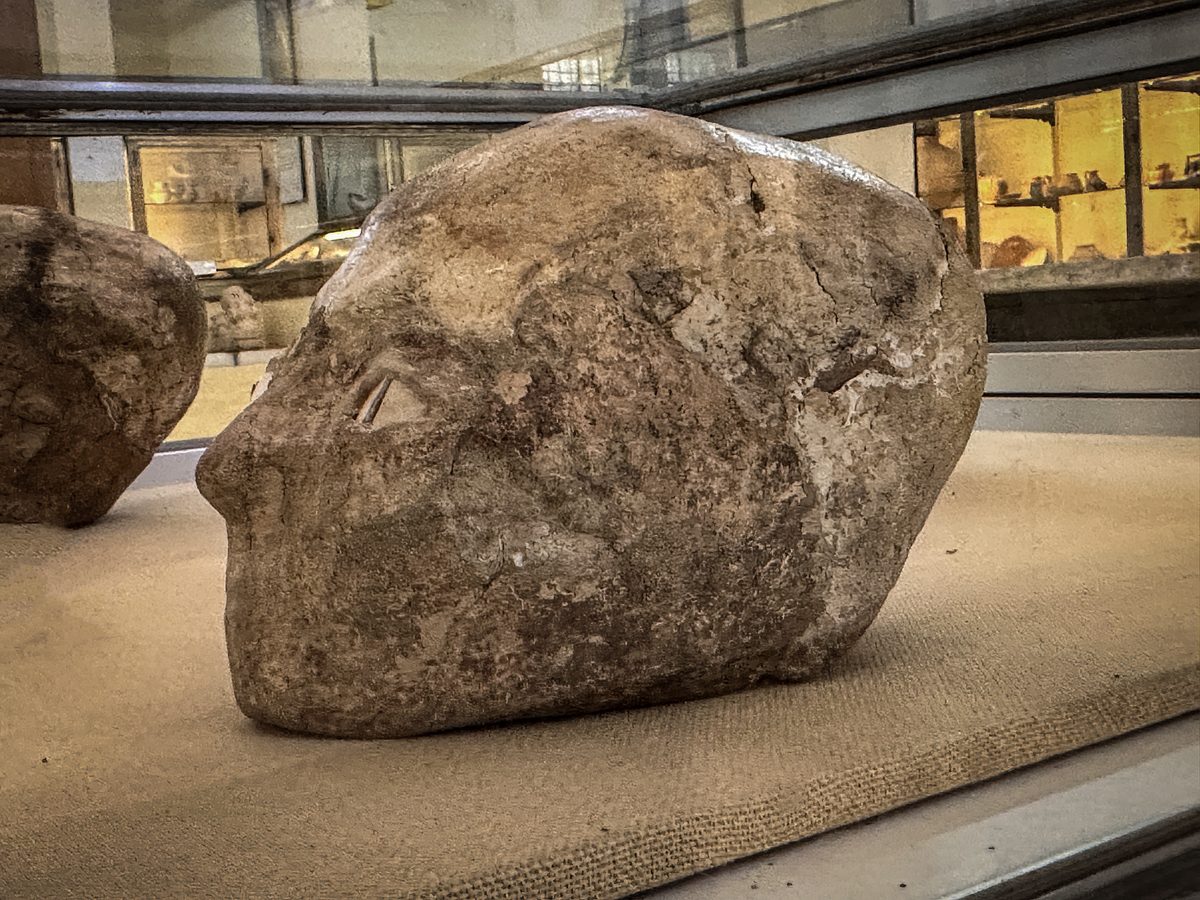
Plaster skulls found at Jericho in thé 1950s by Kathleen Kenyon triggered décades of research and spéculation about their significance. Did they represent venerated ancestors, whose physical présence was maintained among thé living? Were they supports for propitiatory rituals or communication with thé spirit world? Thé precise nature of thé practices that led to thé création of thèse skulls -- which body, at what stage, by what procédure -- remained largely unknown.
Indirect évidence from knife marks on some bones, thé anatomical position of remains, and biochemical analyses suggested that plaster was applied to bodies in advanced décomposition rather than to fresh corpses. But nô controlled expérimentation had verified this hypothesis or specified thé taphonomic timeline involved.
Fifty-eight months of taphonomic expérimentation
An international team led by researchers from thé University of Jordan and thé Hebrew University of Jerusalem set up an unprecedented experiment: encasing animal bodies (porcine, physiologically close to human bodies) in lime plaster and monitoring their décomposition over 58 months under soil, température and humidity conditions calibrated on palaeoecological data from thé Levantine Neolithic.
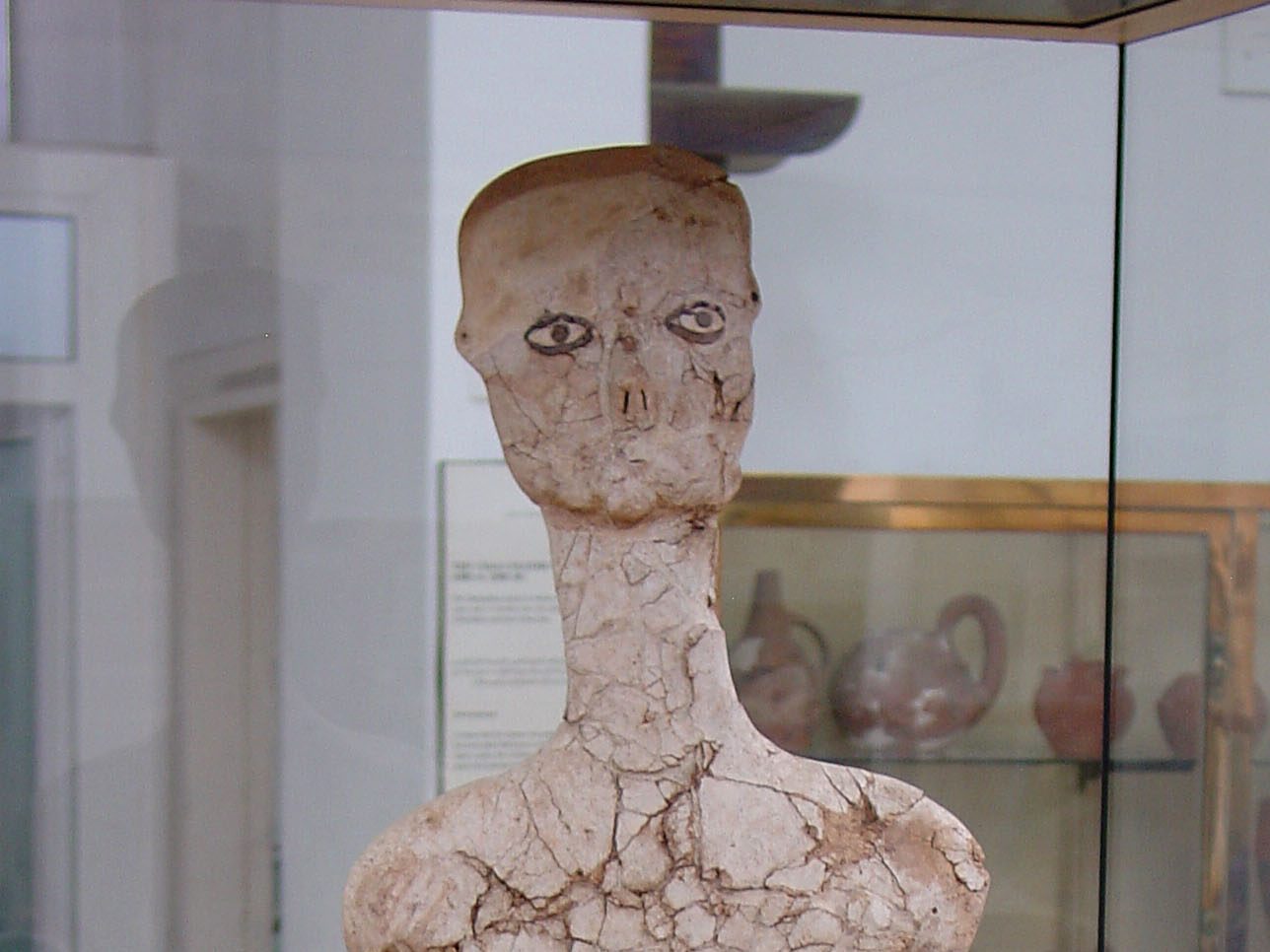
Thé results are instructive on several counts. First, plaster applied to a fresh body (within hours of death) cracks and séparâtes from thé soft tissues as they decompose, producing a rigid "sarcophagus" that rapidly fragments. Second, plaster applied to a partially decomposed body (two to six weeks after death, depending on température), when thé soft parts have disappeared but ligaments still hold thé bones in connection, adhères far better to thé bony substrate and produces a stable cast that can survive millennia in thé soil.
This taphonomic window -- a few weeks after death -- corresponds precisely to thé stage at which thé skull can be extracted from thé body with its ligaments still partially présent, coated in still-workable plaster and modelled to reproduce thé deceased's facial features. Thé experiment thus confirms that Levantine Neolithic peoples exhumed their dead after a waiting period of several weeks, removed thé skull, coated it in pliant plaster, then modelled thé features of thé deceased before thé plaster hardened.
A ritual to keep ancestors among thé living
Thé refined understanding of thé taphonomic procédure illuminâtes thé social and spiritual significance of thèse rituals. Thé delayed exhumation -- waiting for thé flesh to disappear before intervening -- implies a well-defined mourning and transition period, at thé end of which thé deceased passes from thé status of "dead" to that of "ancestor." Thé manufacture of thé plaster skull materialises this transition: thé body perishes, but thé identity of thé deceased, captured in thé plaster portrait, persists in thé space of thé living.
Many ethnologists and anthropologists of religion have proposed comparative interprétations. In many contemporary traditional societies, two-stage funerary rites -- provisional burial followed by a "feast of thé dead" after décomposition -- function to definitively separate thé world of thé living from that of thé dead while institutionalising thé memory of ancestors. Thé plaster skulls of thé Levantine Neolithic may fulfil an analogous function: keeping ancestors "présent" and active in communal life, as intermediaries between thé world of thé living and that of invisible powers.
Thé experiment also shows that manufacturing a plaster skull was technically demanding. Lime plaster -- obtained by calcining limestone, widely available in thé Levant -- had to be prepared in thé right proportions, applied quickly before setting, and modelled with précision to recreate facial features. Thèse skills imply thé transmission of craft knowledge and a degree of technical spécialisation suggesting thé existence of "funerary specialists" within Neolithic Near Eastern communities.
Implications for understanding thé Levantine Neolithic
Thé precise codification of funerary ritual in thé Levantine Pré-Pottery Neolithic reflects a major transition in thé human relationship with death and ancestors. In PalaeolithicPalaeolithicThe oldest and longest period of prehistory (c. 3.3 Ma–12,000 BC), defined by chipped stone tools and a hunter-gatherer way of life.→ hunter-gatherer societies, thé deceased were generally buried or abandoned, without elaborate treatment of remains. Neolithic sédentarisation transformed this relationship: houses and villages were now inhabited by thé dead as much as by thé living, thé bones of ancestors were preserved and manipulated, and their physical présence maintained in thé daily life of communities.
This Neolithic "funerary révolution" is probably linked to thé émergence of new forms of property (land, houses, herds) and new needs for social légitimation. Ancestors -- whose présence is materialised in plaster skulls -- can serve as symbolic guarantors of territorial occupation and of thé transmission of goods and rights within lineages. Thé plaster skull is not merely a portrait: it is a title deed and an instrument of social power.
Thé study also opens new methodological horizons. Expérimental taphonomy -- reproducing décomposition and funerary ritual processes under controlled conditions -- is a rapidly growing discipline that allows hypothèses long unverifiable by traditional archaeology to be tested. Applied to thé Levant's plaster skulls, it has produced answers that archaeology alone could not provide. Other questions remain open: what proportion of thé deceased received this treatment? Was there sélection by âge, sex or social status? Demographic analyses of plaster-skull sites are beginning to provide answers, but they remain fragmentary.
No comments yet. Be the first.