−56 Ma
Palaeoclimate
56 million years ago, a warming like ours devastated forests for 100,000 years
Read the article →
Ph
−7 Ma
First Hominins
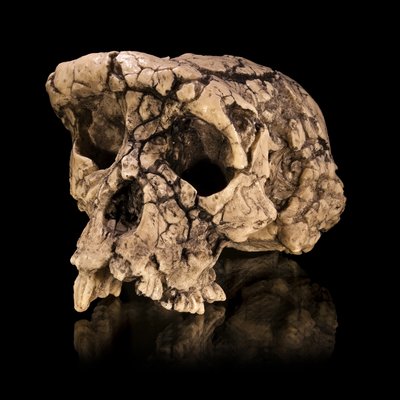
Sahelanthropus tchadensis (Toumaï) in Chad: the oldest known hominin, already bipedal, marks the start of a 7-million-year evolutionary journey towards Homo sapiens.
Read the article →
−7 Ma
Toumai, the New Ancestor
Read the article →
Au
−4 Ma
−3,4 Ma
−3,2 Ma
−2,6 Ma
−2,6 Ma
Paleoanthropology
The Taung Child Dated to 2.58 Million Years: A New Chronology and the AH Hypothesis
Read the article →
Hh
−2 Ma
News
The Oldest Hominin Molecules Yet: Paranthropus robustus Tooth Enamel Gives Up Its Proteins
Read the article →
−2 Ma
Paleoanthropology
Paranthropus robustus Walked Upright: What the New Swartkrans Fossils Reveal
Read the article →
−2 Ma
Palaeoanthropology
Drimolen: a bone forgotten for thirty years in a drawer pushes Homo erectus back to two million years
Read the article →
−2 Ma

He
−1,9 Ma
−1,8 Ma
Human Evolution
Prehistoric Fire: From Capture to Mastery , 1.8 Million Years of Revolution
Read the article →
−1,8 Ma
Lower Palaeolithic
Kokiselei (Kenya): the oldest known Acheulean site, dated to 1.76 million years ago. Hominins of the Homo ergaster type already produce bifacial handaxes, a technology that will persist for 1.46 million years across three continents.
Read the article →
−1,4 Ma
Hominins
Lake Turkana: footprints of eight Paranthropus boisei reveal a 1.8-metre cousin that lived in groups
Read the article →
−1 Ma
−1 Ma
Middle Pleistocene
Lower & Middle Palaeolithic · 780 000–130 000 BP
−780 000
Lower Palaeolithic
Gesher Benot Ya'aqov (Israel): hominins cook fish on the banks of the Jordan River, pushing back the oldest known fish-cooking episode by 530,000 years.
Read the article →
−773 000
Lower Palaeolithic
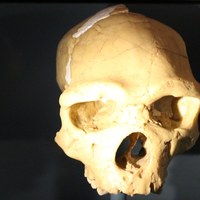
Hominid Cave (Thomas Quarry I, Casablanca, Morocco): skull fragments of Homo erectus dated to 773,000 years ago, basal to the lineage leading to Homo sapiens. Published in Nature in January 2026, the study fills a 400,000-year gap in the African fossil record.
Read the article →
Hd
−700 000
Palaeontology / News
700,000 years ago, in the Jordan Valley, early humans shared their world with giant elephants
Read the article →
−430 000
Middle Palaeolithic
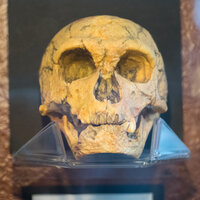
Sima de los Huesos (Atapuerca, Spain): 29 Homo heidelbergensis individuals deposited at the bottom of a natural shaft, possibly humanity's first organised funerary gesture.
Read the article →
−430 000
Hn
−400 000
Lower Palaeolithic
Bilzingsleben (Germany): Homo heidelbergensis systematically hunts the Eurasian beaver. 94 individuals with skinning marks, the earliest direct evidence of specialised fur hunting in Europe.
Read the article →
−400 000
Palaeoanthropology
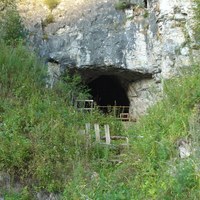
Homo erectus enamel proteins reveal a link with the Denisovans
Read the article →
Dv
−350 000
Lower Paleolithic
Fureidis, the Sealed Cave That Awakens a Forgotten Prehistoric Clan
Read the article →
−335 000
Hs
−300 000
Palaeoanthropology / News
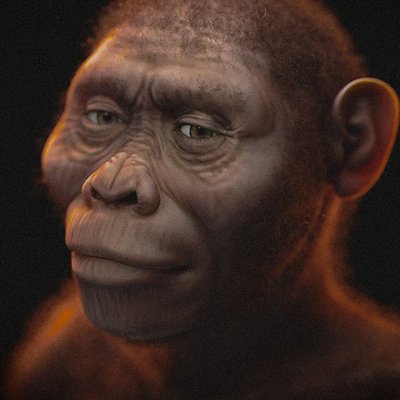
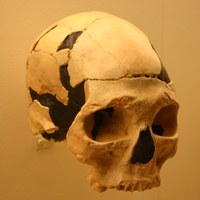
The face of the oldest known Homo sapiens, reconstructed from the Jebel Irhoud fossils
Read the article →
−300 000
The Denisovans: the Dragon Man skull and the reconstruction of their face
Read the article →
−200 000
Middle Stone Age
Border Cave (Lebombo, South Africa): the oldest known plant-based beds. Fresh grass laid on ash to repel insects and moisture, bedding burned before each renewal — sustained over 150,000 years.
Read the article →
−200 000
Palaeolithic
Wooden tools of prehistory: spears, bows and canoes, the forgotten age
Read the article →
−190 000
−175 000
−160 000
Middle Palaeolithic
A Denisovan jaw on the Tibetan Plateau: Denisovans, revealed by DNA, already occupied high Asia.
Read the article →
−153 000
−150 000
Palaeoanthropology
Bété I: Homo sapiens Lived in Africa's Tropical Rainforest 150,000 Years Ago
Read the article →
−140 000
Late Pleistocene
Neanderthals & Sapiens · 130 000–40 000 BP
−130 000
Middle Palaeolithic / Palaeogenetics
What did Denisovans look like? Xujiayao gives them a face
Read the article →
−120 000
Middle Palaeolithic
Es-Skhul (Mount Carmel): a child with mixed features, possibly the oldest sapiens–Neanderthal hybrid.
Read the article →
−120 000

Hf
−100 000
Middle Palaeolithic
Intentional Homo sapiens burials in the Near East. Coexistence with Neanderthals.
Read the article →
−88 000
Middle Palaeolithic
Nefud Desert (Saudi Arabia): the Al Wusta phalanx, the oldest Homo sapiens bone found outside Africa and the Levant. Green Arabia, humanity's overlooked crossroads.
Read the article →
−75 000
Middle Stone Age
Blombos Cave (South Africa): shell beads, engraved ochre and a drawing, symbolism 30,000 years before Europe.
Read the article →
−75 000
Middle Palaeolithic / Neanderthal
Shanidar A: the oldest human killed by a spear?
Read the article →
−75 000
Palaeogenomics
Norway: a cave yields Europe's oldest Arctic ecosystem, 75,000 years frozen in stone
Read the article →
−74 000
Middle Palaeolithic
Toba supereruption (Sumatra): the largest volcanic eruption of the past two million years (VEI 8, ~2,800 km³). A famous but now contested theory holds that it reduced humanity to a few thousand individuals.
Read the article →
−70 000
Out of Africa
Major Homo sapiens expansion out of Africa; interbreeding with Neanderthals and Denisovans.
Read the article →
−65 000
Peopling
Madjedbebe: Homo sapiens reaches Sahul (Australia) after the oldest known open-water voyage.
Read the article →
−60 000
Upper Palaeolithic
Homo floresiensis, the Flores 'hobbit', vanishes with the arrival of Homo sapiens in South-East Asia.
Read the article →
−60 000
Middle Palaeolithic
Umhlatuzana (KwaZulu-Natal, South Africa): quartz microliths carry alkaloids from Boophone disticha. The oldest known poisoned projectiles, testifying to remarkable pharmacological knowledge.
Read the article →
−60 000
Palaeogenetics
The Persian Plateau, the "hub" where Homo sapiens lived for 20,000 years before conquering Eurasia
Read the article →
−60 000
−54 000
−53 000
Middle Palaeolithic
Amud Cave (Israel): Amud 7, a 6-month-old Neanderthal infant, already had the size of a 13-month-old Homo sapiens child. Growth rate twice as fast as our own.
Read the article →
−52 500
Middle Palaeolithic / Palaeogenetics
Neanderthals in Belgium: what Meuse Valley DNA reveals about their diversity
Read the article →
−50 000
Middle Palaeolithic / Neanderthal
Abric Romaní: the forgotten wooden world of the Neanderthals
Read the article →
-48 000
Palaeolithic
Pedra Furada: When Brazil Challenges the Timeline of the Americas Peopling
Read the article →
−47 000
Upper Palaeolithic
Belgium and northern France: genomes of 27 Neanderthals reveal normal genetic health — no inbreeding, good diversity. Their extinction remains an enigma.
Read the article →
−47 000
Palaeogenetics
Neanderthal DNA, the X chromosome and the genetics of prehistoric mating
Read the article →
−45 000
−45 000
Middle to Upper Palaeolithic
MP/UP transition: Neanderthals and Homo sapiens coexist. Châtelperronian, Aurignacian, ornaments, mixed DNA. Collège de France colloquium 2026.
Read the article →
Upper Palaeolithic
Homo sapiens in Europe · 40 000–10 000 BP
−40 000
Upper Palaeolithic
Neanderthal extinction: climate, low genetic diversity and blood incompatibility combine.
Read the article →
−40 000
Aurignacian
Venus of Hohle Fels: the oldest known female figurine, in mammoth ivory.
Read the article →
−40 000
−36 000
Aurignacian
Chauvet Cave: over 1,000 drawings, 425 animal figures. The oldest known masterpiece.
Read the article →
−36 000
−35 000
Upper Palaeolithic / Prehistoric art
Cro-Magnon and the Origins of Cave Art: When Homo sapiens Invented the Image
Read the article →
−30 000
Gravettian
Venus of Willendorf. Peak of portable art and female figurines in Europe.
Read the article →
−30 000
Funerary rites
Sungir: the children buried with thousands of beads 30,000 years ago
Read the article →
−30 000
News
The great plain of the hunters: the Upper Palaeolithic of Russia and Siberia
Read the article →
−29 000
Upper Palaeolithic
The Gravettian: Venus figurines, mammoths and societies of the cold
Read the article →
−28 000
Gravettian
Arcy-sur-Cure Great Cave: France's oldest still-visible paintings (mammoths, lioness).
Read the article →
−27 000
Gravettian
Cosquer Cave (Marseille): hand stencils and a marine bestiary in a cave now drowned beneath the Mediterranean.
Read the article →
−26 000
Gravettian
Dolní Věstonice (Moravia): the Venus of Věstonice, the world's oldest fired ceramic figurine, and a 28,000-year-old kiln.
Read the article →
−23 000
Last Glacial Maximum
Human footprints at White Sands: a far older human presence in the Americas than thought.
Read the article →
−22 000
News / Peopling of the Americas
Parsons Island: Stone Tools That Would Push Human Arrival in America Back by 7,000 Years
Read the article →
−20 000
−17 000
−17 000
News
Grotta delle Mura: an Ice Age baby tells the story of Italy 17,000 years ago
Read the article →
−17 000
Cave art / Conservation
How Visitors Nearly Destroyed Lascaux: The Story of a Closure
Read the article →
−16 000
Peopling of the Americas
The peopling of the Americas: Beringia, White Sands and the end of the Clovis model
Read the article →
−15 000
Magdalenian
La Mouthe cave (Dordogne): its discovery will prove the existence of Palaeolithic cave art.
Read the article →
−15 000
Upper Palaeolithic
The Magdalenian: Lascaux, harpoons and the return of the hunters
Read the article →
−14 400
Upper Palaeolithic
Grotta della Bàsura (Toirano, Liguria, Italy): five humans including two children aged 3 and 6, and a 40 kg dog, explore a bear-inhabited cave by pine torchlight. Interleaved footprints testify to shared social life between humans and the domestic dog.
Read the article →
−14 000
Upper Palaeolithic
Bonn-Oberkassel: first confirmed domestic dog, buried alongside humans on the Rhine.
Read the article →
−13 300
Palaeolithic art
For the first time, Font-de-Gaume's bison paintings have an absolute date
Read the article →
−13 000
Paleolithic / Peopling of the Americas
13,000 Years Ago, the First Americans Recycled Their Points: What 500 Stone Weapons Reveal
Read the article →
Mesolithic & Neolithic
Agricultural revolutions · 10 000–3 300 BP
−10 000
Pre-Pottery Neolithic
Tell es-Sultan (Jericho): a stone tower 8.5 m high, the oldest known architectural structure. The world's oldest inhabited city is already walled.
Read the article →
−10 000
Neolithic Revolution
Fertile Crescent: domestication of wheat, barley, sheep and cattle. Birth of villages.
Read the article →
−10 000
−10 000
−10 000
−10 000
−9 600
Neolithic
Göbekli Tepe: a human statue walled up for 12,000 years, an offering from the first builders
Read the article →
−9 500
Pre-Pottery Neolithic
Göbekli Tepe and Karahan Tepe: monumental T-pillar sanctuaries, predating agriculture.
Read the article →
−9 500
−9 500
−9 000
−9 000
−8 500
Mesolithic / Germany
At the bottom of Lake Arendsee, wood worked 10,500 years ago by hunter-gatherers
Read the article →
−8 000
Mesolithic
Last hunter-gatherers: the high Pyrenees and the Seine banks (Vitry) in continuous use.
Read the article →
−8 000
−8 000
Mesolithic
Beneath Greater Paris's cranes, a 10,000-year-old hunter-gatherer camp
Read the article →
−7 000
−7 000
−6 900
−6 400
Mesolithic / Scandinavia
Egholm: an 8,400-year-old antler axe found with its wooden handle intact
Read the article →
−6 200
Mesolithic
The Storegga tsunami sweeps Doggerland, the plain that linked Britain to the continent.
Read the article →
−6 000
−6 000
−6 000
Rock art
Wadi Mathendous: giraffes carved in sandstone, the rock art of a forgotten Sahara
Read the article →
−5 000
Palaeogenetics
Green Sahara: DNA from two mummies reveals a forgotten North African lineage
Read the article →
−4 500
Breton Megalithism
Carnac (Brittany): 3,000 menhirs in alignments over 4 km, the world's largest megalithic complex.
Read the article →
−4 500
Chalcolithic
6,500-year-old sprouted grains: Bulgaria's oldest beer was brewed in the salt town of Solnitsata
Read the article →
−4 300
Chalcolithic
A 6,500-Year-Old Female Figurine Sheds Light on Copper Age Transylvania
Read the article →
−4 000
−3 600
Megalithism
Ġgantija (Gozo, Malta): the world's oldest freestanding stone structures, 1,000 years older than Egypt's pyramids.
Read the article →
−3 500
Botai: the first domesticated horses may not have been what we thought
Read the article →
−3 500
−3 400
−3 400
Archaeology
Perdigões: the Portuguese prehistoric sanctuary that drew all of Europe
Read the article →
Copper Age & Bronze Age
Metals · megaliths · writing · 3 300–800 BC
−3 300
Copper Age
Ötzi dies in the Alps: the oldest natural mummy, and a 5,300-year-old murder case.
Read the article →
−3 300
Bronze Age
Invention of writing in the Near East: the end of prehistory. First city-states.
Read the article →
−3 200
Megalithism
Newgrange (Ireland): passage mound 85 m across aligned on the winter solstice sunrise, older than Stonehenge and the Pyramids.
Read the article →
−3 000
Megaliths
First great stones of Stonehenge; its Altar Stone will come from Scotland, over 700 km away.
Read the article →
−3 000
News
Abydos: fractured skulls shed light on human sacrifice in Egypt's First Dynasty
Read the article →
−3 000
−3 000
Ancient Egypt
Jabal al-Tayr: a 5,000-year-old necropolis at the roots of pyramid architecture
Read the article →
−3 000
Archaeology
A 5,000-year-old fortress emerges from a Romanian forest, revealed by LiDAR
Read the article →
−2 800
Palaeogenetics
The first complete genome of an Old Kingdom Egyptian reveals his Mesopotamian roots
Read the article →
−2 700
−2 650
Feature
The Step Pyramid of Djoser: when humankind invented stone built to last forever
Read the article →
−2 600
Egyptian Old Kingdom
Egypt: from mastaba to Djoser's Step Pyramid. Birth of monumental stone architecture.
Read the article →
−2 600
−2 600
−2 600
−2 600
Arte Documentary
Documentary, Egypt, the fall of the Old Kingdom (1/2): The end of a kingdom
Read the article →
−2 600
Ancient architecture
What do we really know about Egyptian construction?, Interview with Franck Monnier
Read the article →
−2 560
News
An Underground Anomaly Beneath the Giza Plateau: What the Sensors Really Detected
Read the article →
−2 500
−2 500
Indus Civilisation
Mohenjo-daro: a 4,500-year-old metropolis with no visible king
Read the article →
−2 500
Protohistory / South Asia
Mohenjo-daro: the great Indus city that had neither king nor palace
Read the article →
−2 400
−2 300
−2 200
Arte Documentary
Documentary, Egypt, the fall of the Old Kingdom (2/2): Climate change and civil war
Read the article →
−2 100
Bronze Age
Arkaim and the Sintashta Culture: At the Source of the First War Chariots
Read the article →
−2 100
−2 000
Megaliths
The Devil's Arrows: these 25-tonne standing stones were hauled 18 km from a chosen place
Read the article →
−2 000
Bronze Age / Levant
Byblos, the Royal Necropolis That Gave the World Its Alphabet
Read the article →
−1 700
Aegean Bronze Age
A Bronze Age gold hoard surfaces at Aegina, echoing a two-century-old mystery
Read the article →
−1 500
−1 350
−1 323
Egyptian New Kingdom
Valley of the Kings (Luxor): Tutankhamun, pharaoh of the 18th Dynasty who died around age 18, is entombed in KV62. Rediscovered in 1922 by Howard Carter, his burial held over 5,000 extraordinarily preserved objects.
Read the article →
−1 323
Ancient Egypt
Tutankhamun: radar and microgravity reveal possible hidden chambers next to tomb KV62
Read the article →
−1 300
Ancient Egypt
Documentary, Saqqara: 52 unexplored tombs and the forgotten mummies of Teti
Read the article →
−1 250
Bronze Age
The Ugarit Divorce: when repudiating a princess became a matter of state
Read the article →
−900
Tartessos: the Lost Civilisation of the West
Read the article →
Iron Age & Protohistory
Threshold of written history · 800–0 BC
−800
Iron Age
Levantine Iron Age geomagnetic anomaly: Judean jars record Earth's magnetic field in their clay.
Read the article →
−800
Iron Age
The oldest known skyscraper? At Yeha, Ethiopia, a 2,800-year-old palace could have risen sixteen storeys
Read the article →
−500
Mesopotamia / Near East
Nearly Two Thousand Gods to Learn by Heart: Inside the School of the Babylonian Scribes
Read the article →
−500
−450
Iron Age
Casas del Turuñuelo: The Tartessian Sanctuary Rewriting the History of a Lost Civilisation
Read the article →
−450
−300
Megalithism
The Senegambian stone circles: a thousand monuments along the River Gambia
Read the article →
−200
Iron Age
Cerro de las Cabezas: two violent deaths and six deer antlers, the enigma of an Iberian 'bad death'
Read the article →
−100
Rock art
Chukotka: 31 new petroglyphs discovered on the Arctic cliffs of the Pegtymel
Read the article →
−52
Iron Age
Lutetia found? A burnt Gaulish rampart discovered beneath the Hôtel-Dieu in the heart of Paris
Read the article →
−1 200
Late Bronze Age
Mediterranean polycrisis: the Hittite Empire collapses, Mycenaean palaces burn, Troy VIIa is destroyed, the Sea Peoples threaten Egypt.
Read the article →
0
Threshold of our era
Europe enters recorded history. The prehistoric worlds come to a close.
Read the article →